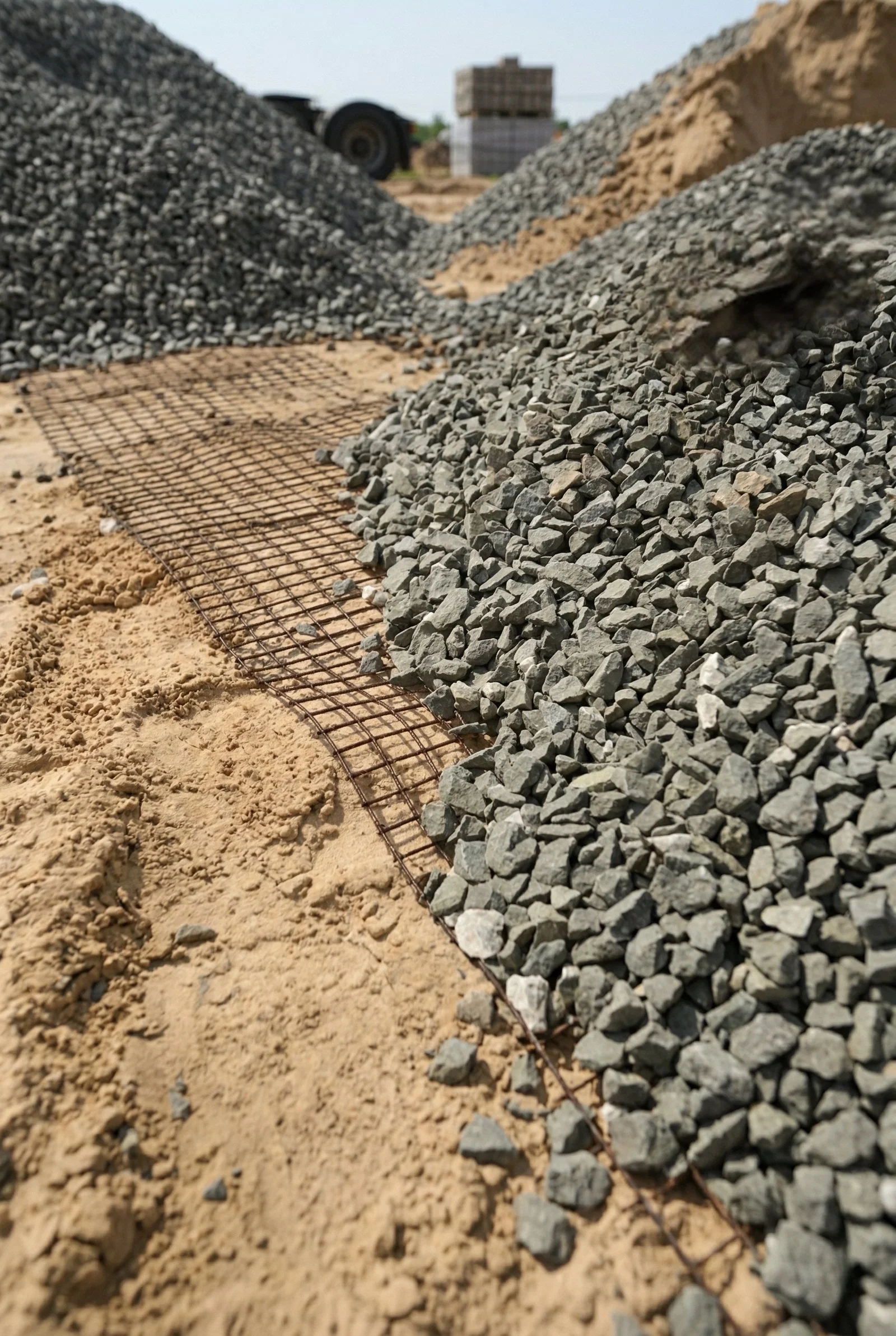
Unidirectional Geogrid: High-Strength Soil Reinforcement Solutions
Unidirectional Geogrid is a technical material designed to meet the needs of ground stabilization and reinforced footing structures in modern civil engineering, possessing high tensile capacity. It is used especially in projects that require high load‑carrying capacity in a single direction, to enhance soil performance and ensure structural safety.
What is Unidirectional Geogrid and How is it Produced?
Unidirectional Geogrids are produced by weaving polyester (PET) microfilaments into a rectangular pattern and then coating them with PVC (Polyvinyl Chloride) to provide protection against external factors. The most distinctive feature of this material is that its tensile stress in the primary direction (longitudinal) is much higher than in the transverse direction.
The most critical point in the production process is the node strength. Thanks to a specially developed stitching method, the nodes exhibit superior resistance to seismic movements and dynamic loads, thereby extending the life of the project.
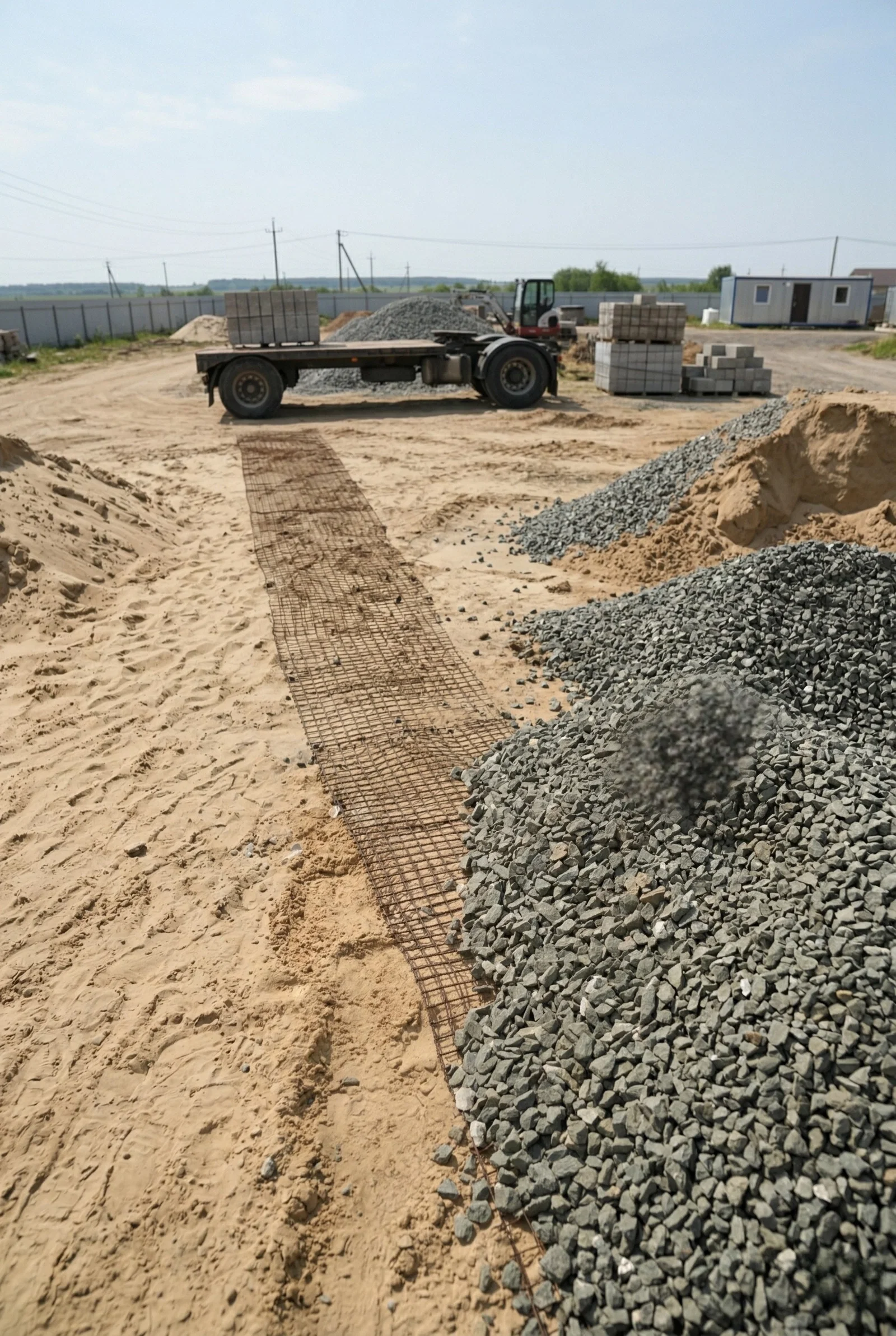
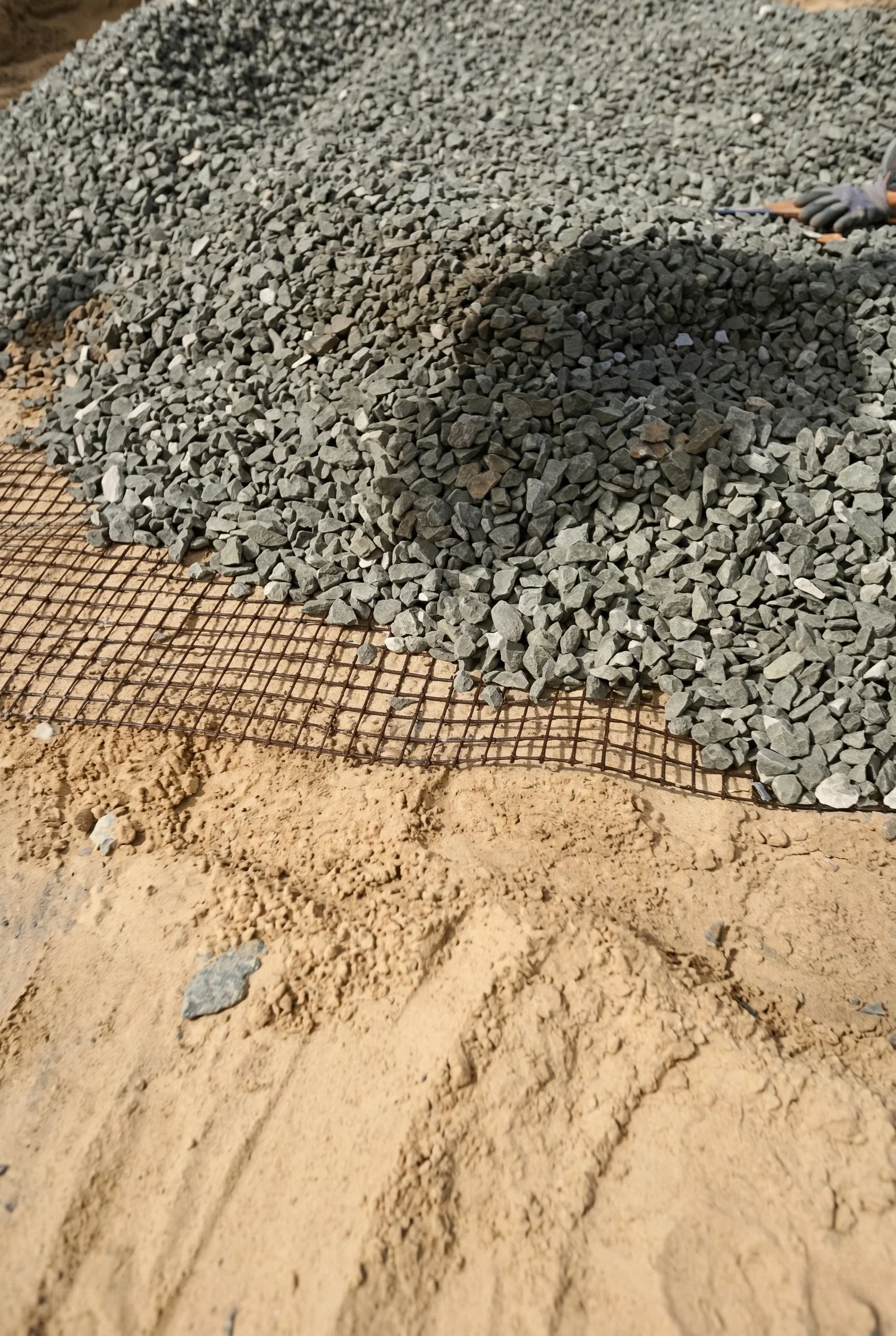
One-Way Geogrid Applications and GeoArme Systems
In projects where the strength is focused in one direction, using GeoArme (Reinforced Retaining Structure Systems) together provides both economic and aesthetic results. Common application areas are:
Road and Railway Projects: Provides retaining wall stabilization in split road widening works and high-fill roads.
Bridge and Intersection Constructions: Used safely in approach walls, edge footwalls, and elevation walls of bridge intersections.
Urban Areas and Expropriation: Creates vertical structures to gain space where expropriation boundaries are narrow.
Soil Improvement and Park-Garden: Provides aesthetic and robust solutions in stepped retaining walls in parks and gardens.
Industrial Areas: Ensuring the safety of retaining structures in storage yards and factory areas.
Why Choose One-Way Geogrid? (Advantages)
One-Way Geogrids, offering many advantages over conventional reinforced concrete walls in construction projects, stand out with the following features in terms of cost and performance:
Superior Interlocking Feature
The granular backfill poured onto the geogrid fully interlocks with the geogrid's pores. This mechanical locking allows the geogrid to resist the tensile and shear stresses in the soil, creating a reinforced platform.
Resistance to Seismic and Dynamic Loads
Its flexible structure dampens seismic waves during an earthquake. Unlike rigid (stiff) structures, it does not risk cracking or sudden collapse; it shows high resistance to settlements.
Long Life and Environmental Resistance
The PVC coating protects polyester fibers from UV rays, chemicals, and microorganisms. This ensures the material maintains performance underground for over 100 years.
Fast and Cost-Effective Application
It is applied much faster compared to reinforced concrete systems. By reducing on-site concrete pouring labor, it significantly lowers the total project cost.
Feature | Description |
Raw Material | High-Strength Polyester (PET) |
Coating Material | Protective PVC |
Primary Function | Reinforcement, Strengthening, Stabilization |
Structure Type | GeoArme Retaining Systems |