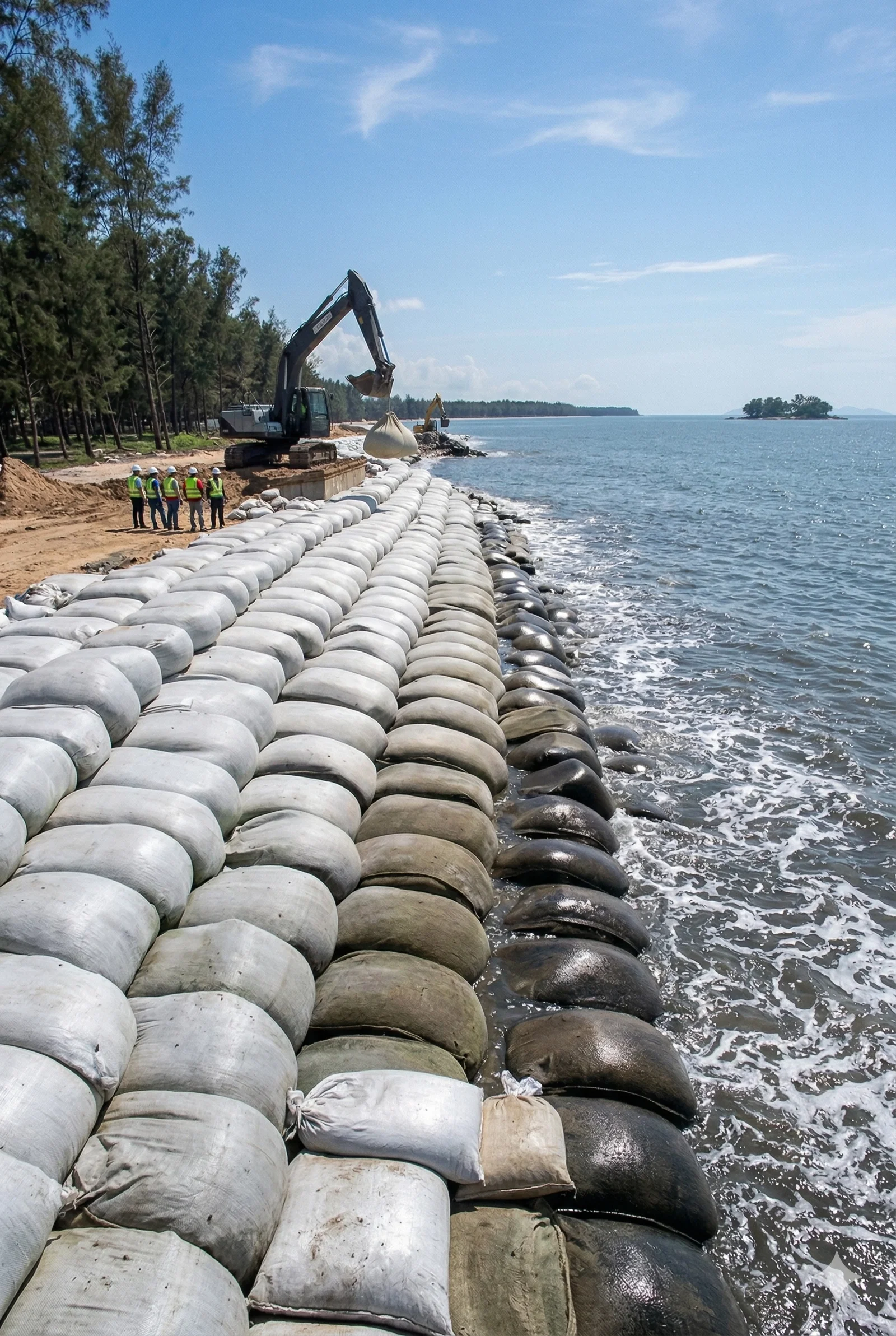
GeoTorba Coastal Retaining Structures: Durable and Ecological Solutions
GeoTorba (Geobag) is a high‑technology coastal protection element developed as an alternative to traditional concrete or stone fill methods in modern coastal engineering. These structures, which exhibit superior resistance especially against variable water loads and erosive wave action, create a protective shield that harmonizes with nature.
What is GeoTorba and What Are Its Technical Features?
GeoTorba coastal retaining structure elements are produced by stitching specially manufactured high‑strength polypropylene (PP) woven or non‑woven geotextile fabrics with high‑durability yarns. The primary purpose of these bags is to hold the sand or aggregate filled inside together, forming a flexible yet very strong block.
Flexibility: Thanks to its shape‑changing capability, it adapts to ground settlements without cracking.
High Filtration: While allowing water to pass, it retains fine particles to prevent erosion.
UV Resistance: Long‑lasting against sunlight and the corrosive effects of sea water.
Mechanical Filtration: Provides an excellent filtration layer in pipe lines and river beds.
GeoTorba Usage Areas
GeoTorba systems are preferred across a wide range from maritime to river restoration due to their versatile structure:
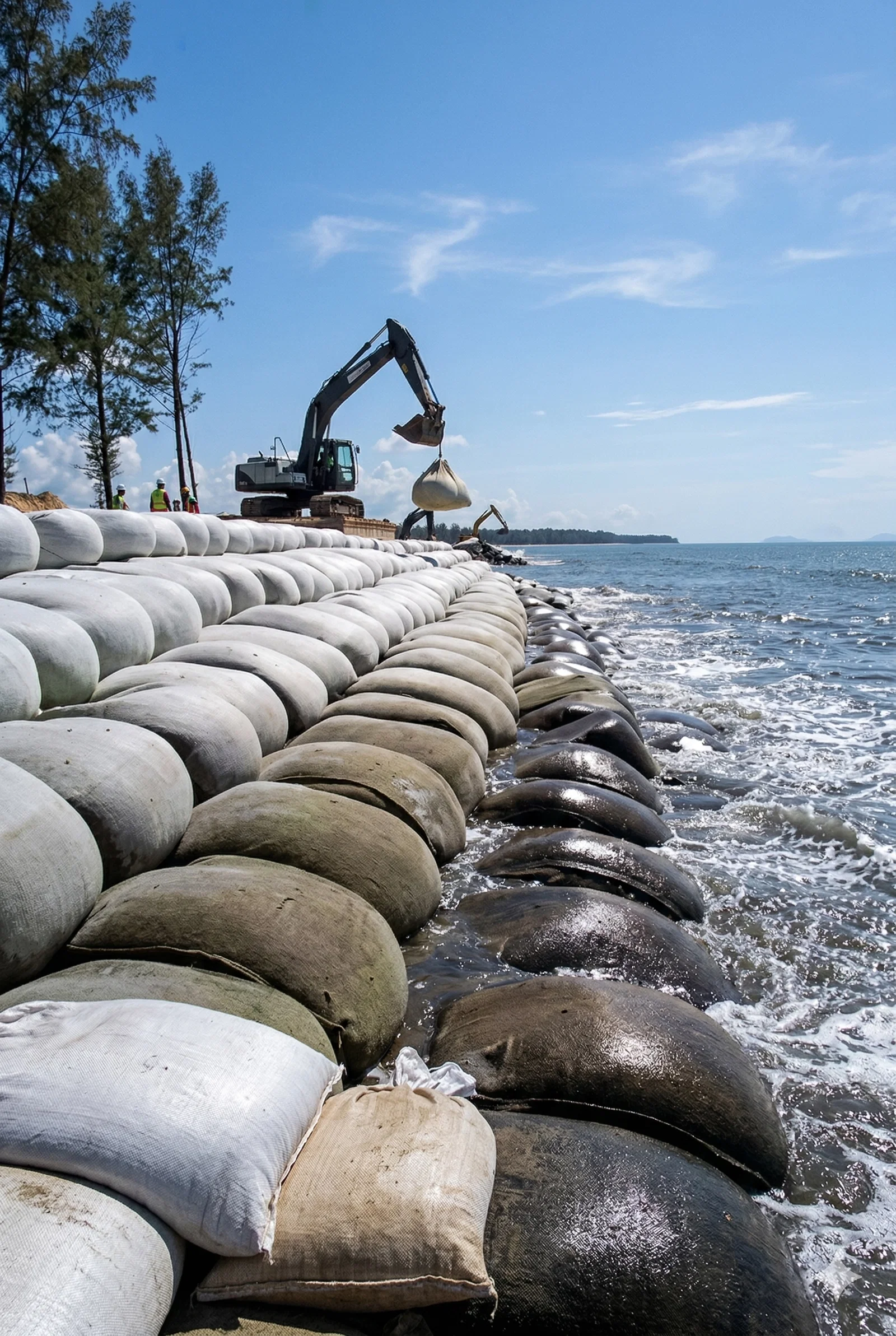
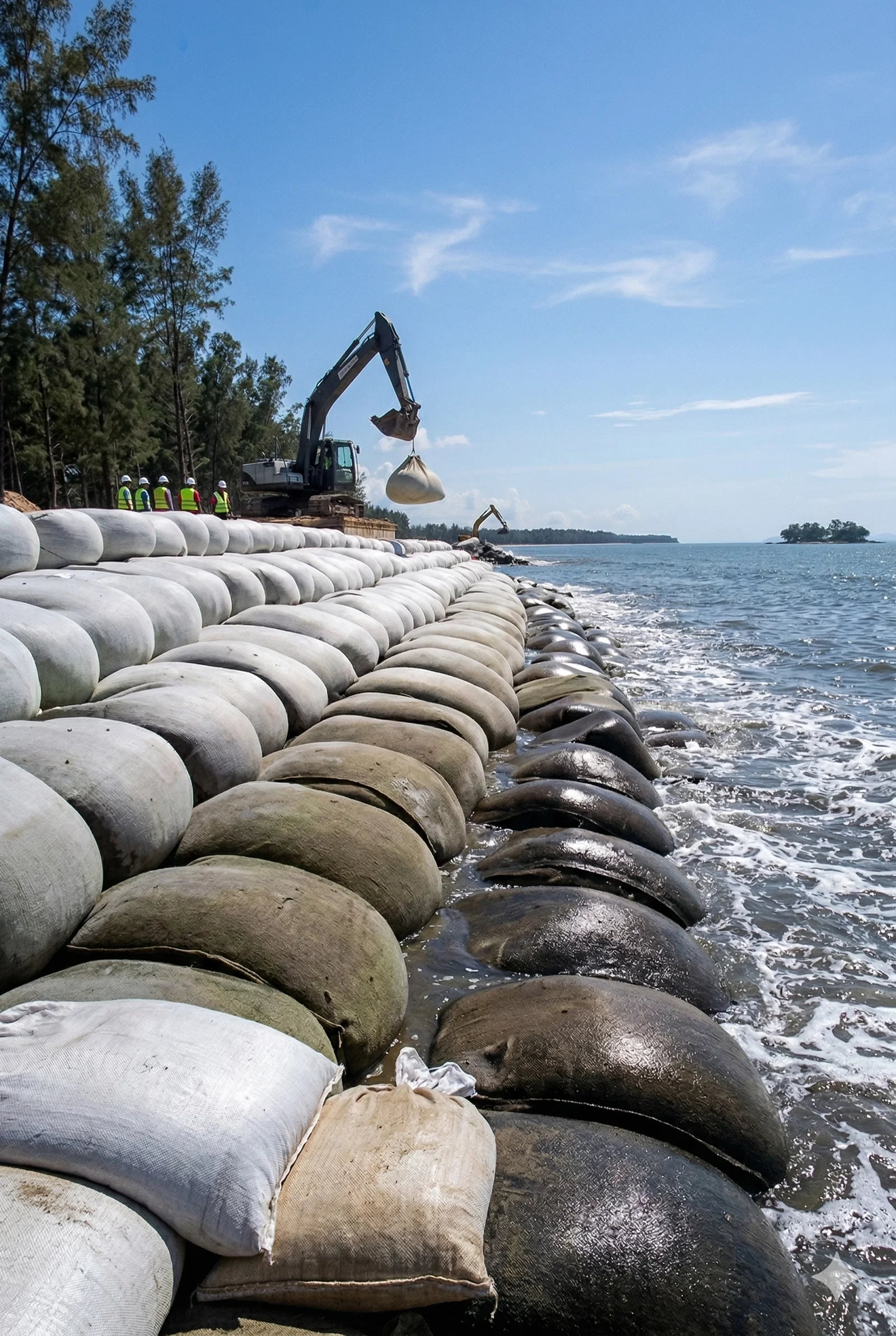
Coastal Retention and Protection Structures: Protects the shoreline from wave erosion.
Breakwater and Seawall Construction: Used to break sea energy and promote sand accumulation on the coast.
Pipeline Cushioning: Ideal for securing underwater pipe lines and protecting them from mechanical damage.
River and Canal Restoration: Prevents scour in riverbeds and provides shoreline stabilization.
Sand Dune Reinforcement: Placed inside natural coastal dunes to act as reinforcement against storms.
Mechanical Filtration: Functions as a filtration to control turbidity in sea or rivers.
Why Should GeoTorba Coastal Retention Elements Be Preferred?
Unlike traditional stone fill or concrete walls, GeoTorba applications are lower cost and more logistically practical. Allowing the use of locally sourced fill materials (such as on-site sand) reduces the carbon footprint, offering an eco‑friendly solution. Additionally, its ability to absorb the hydraulic energy of water prevents the reflection of energy like concrete structures, which could cause erosion elsewhere.