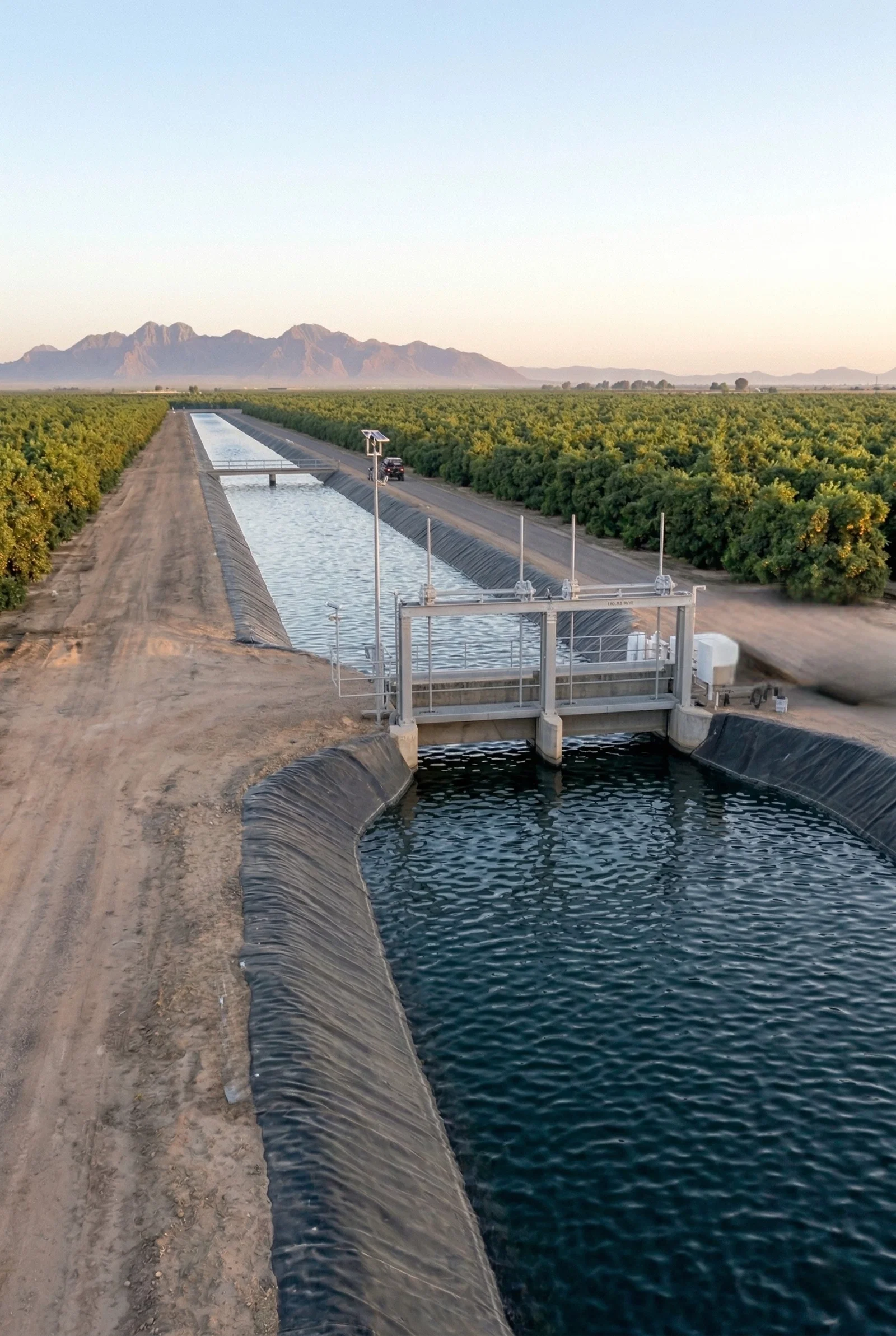
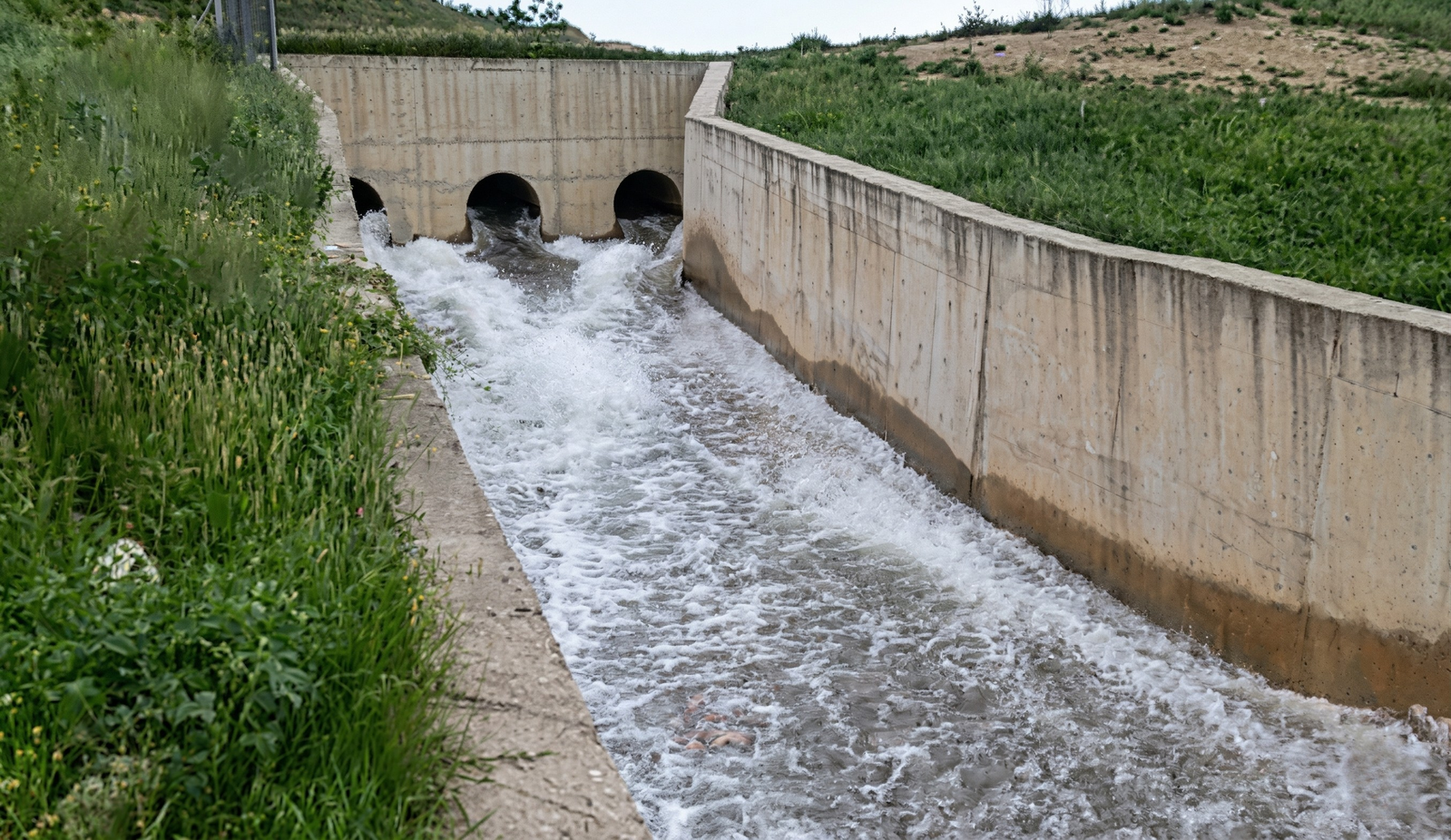
Water conveyance channels are open channels used to direct water flow in a specific direction. Water conveyance channels can be used in many different places such as agricultural areas, industrial facilities, power plants, and cities.
Water conveyance channels are usually made of concrete, metal, or plastic materials. The design of water conveyance channels can vary depending on factors such as water flow rate, layout of the area, and other considerations.
Among the advantages of water conveyance channels are the ability to allow water to reach a specific location without interference, preventing water loss in agricultural and industrial areas, and reducing environmental pollution.
However, the construction and operation of water conveyance channels can be expensive because they must be carried out by a technically skilled team. Additionally, water conveyance channels need to be continuously monitored and repaired when necessary.
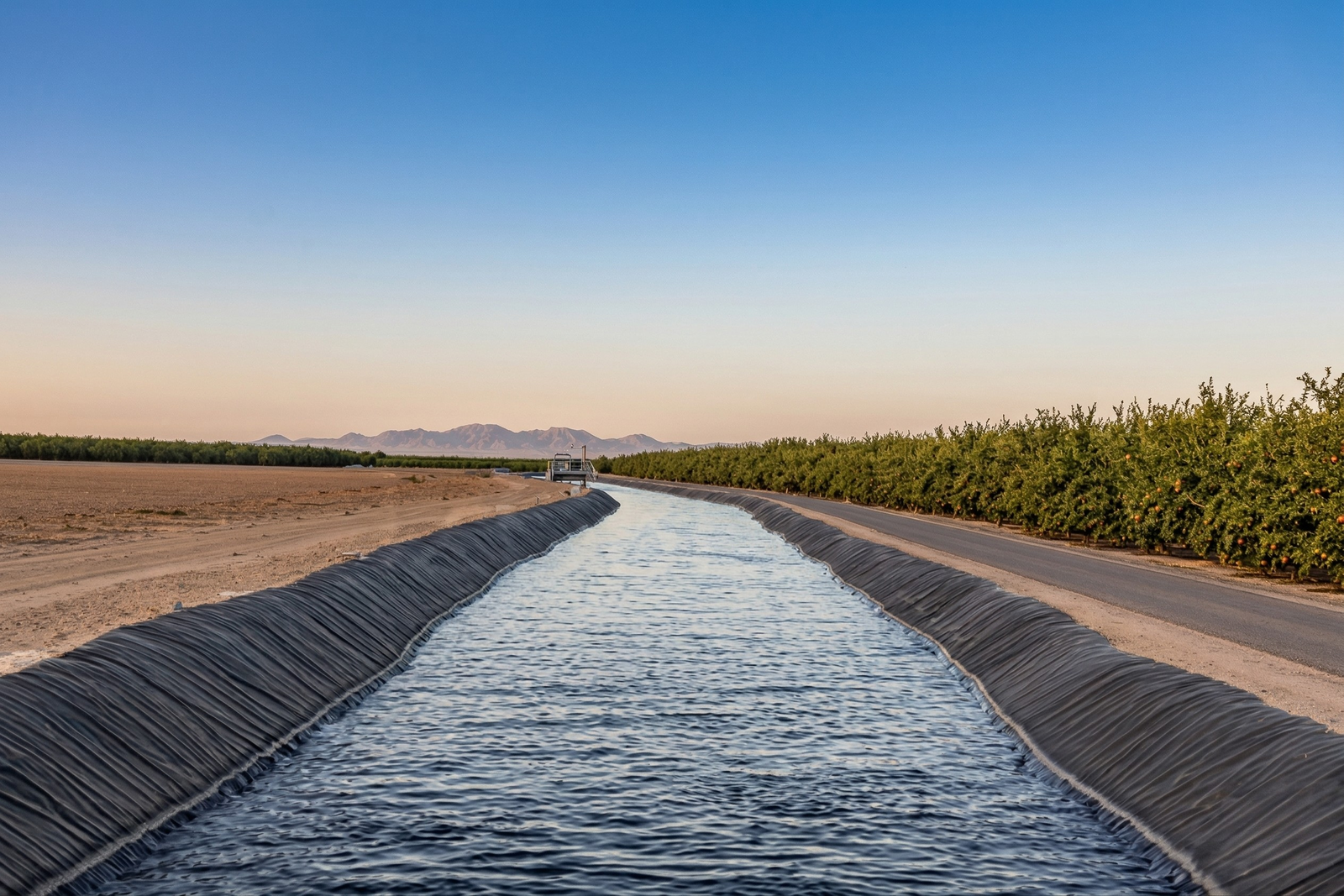
Geomembrane in Water Transmission Channels
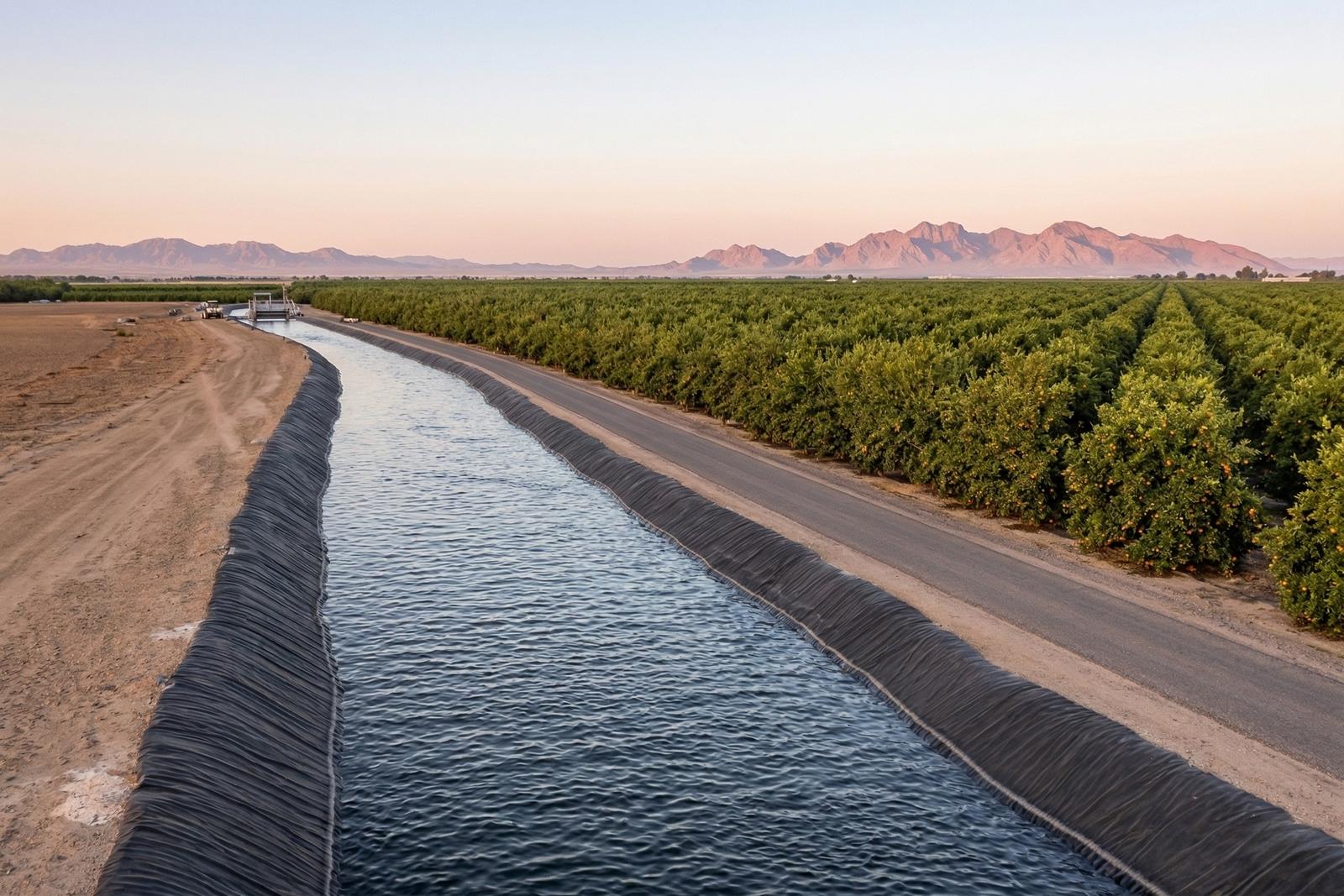
Geomembrane is a material used to reduce water loss and prevent environmental pollution. It is a durable, long‑lasting, and lightweight material for water insulation, and it is used to prevent the filtration of water in the channel. It also reduces environmental pollution by protecting the soil and vegetation outside the water transmission channel.
The application of geomembrane in water transmission channels is a technique used to prevent water loss, stop leaks, and increase channel efficiency. This application is used in irrigation systems, water storage and transport infrastructure, industrial water management projects, and various water transmission needs. Here is a detailed explanation of the geomembrane application in water transmission channels:
Geomembrane Application in Water Transmission Channels
Water transmission channels are structures used for transporting and distributing irrigation water, and preventing seepage and loss of water is critically important. Geomembrane applications prevent seepage and evaporation of water by placing waterproof membranes under and on the sides of the channels.
Steps for Geomembrane Application in Water Transmission Channels
Channel Preparation: The channel floor and side surfaces are cleaned and repaired appropriately. It is important to make the floor smooth and tight.
Geomembrane Selection: A geomembrane material suitable for the project's requirements is selected. Factors such as channel dimensions and the chemical composition of the water influence this selection.
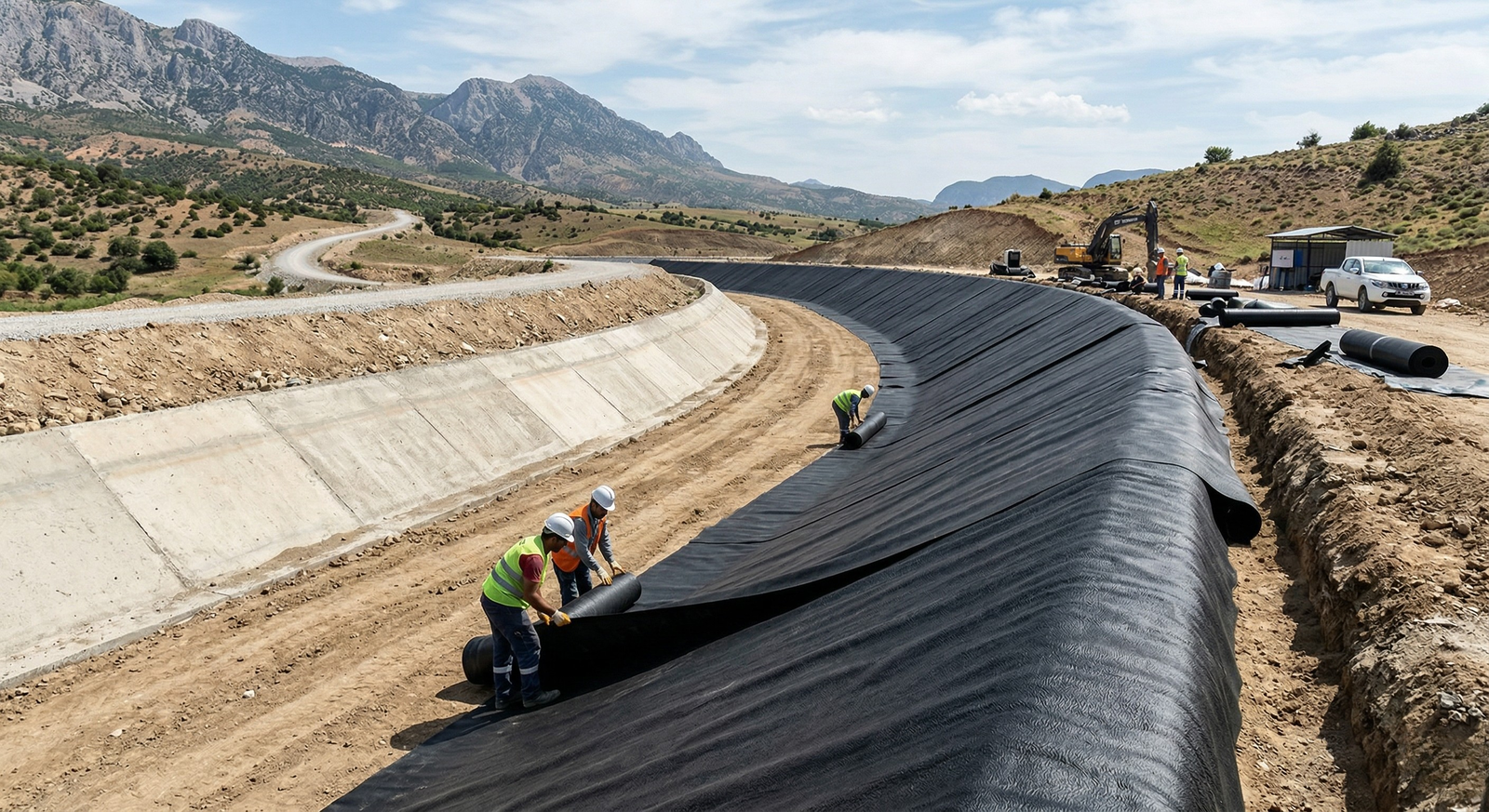
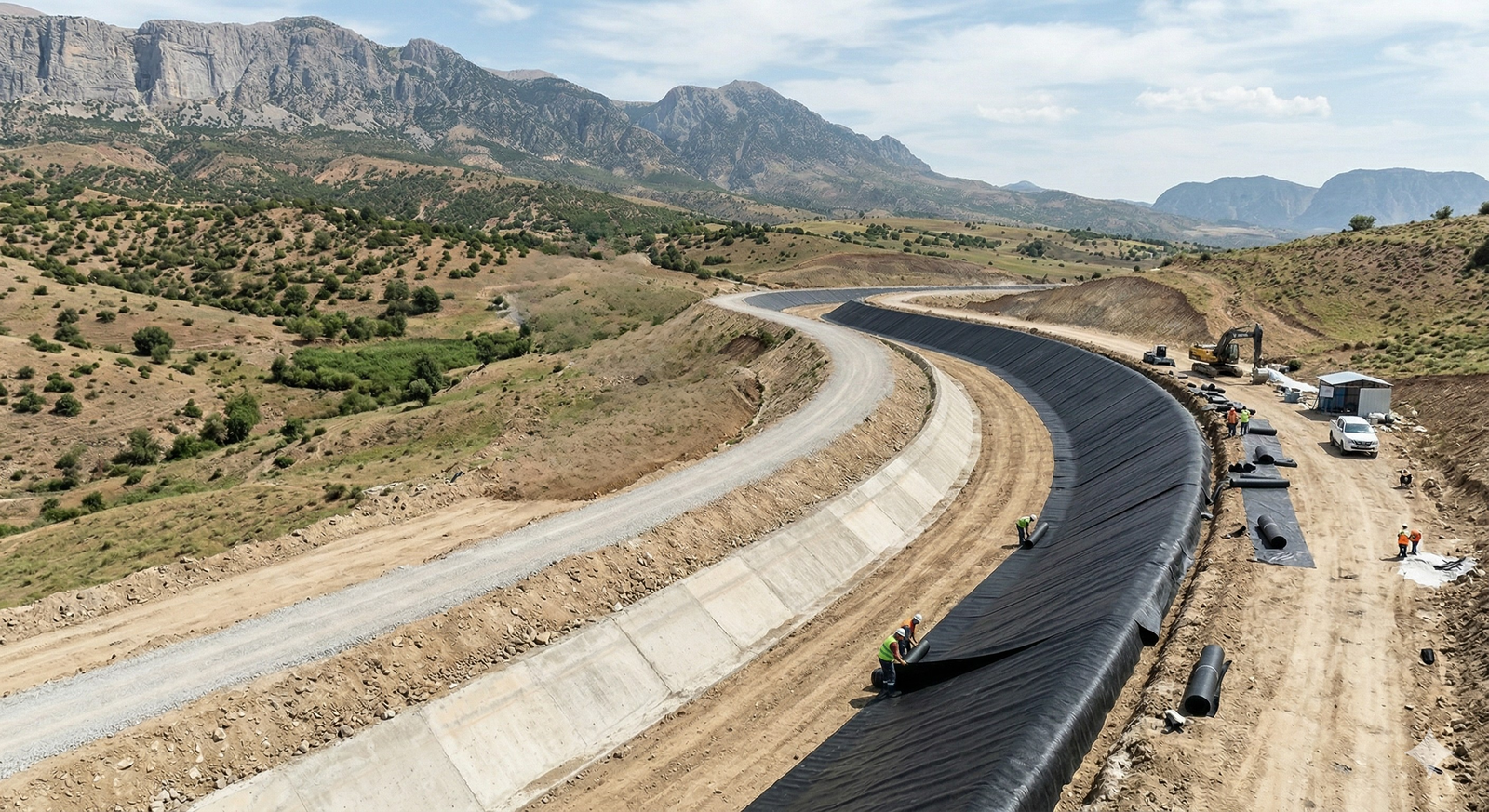
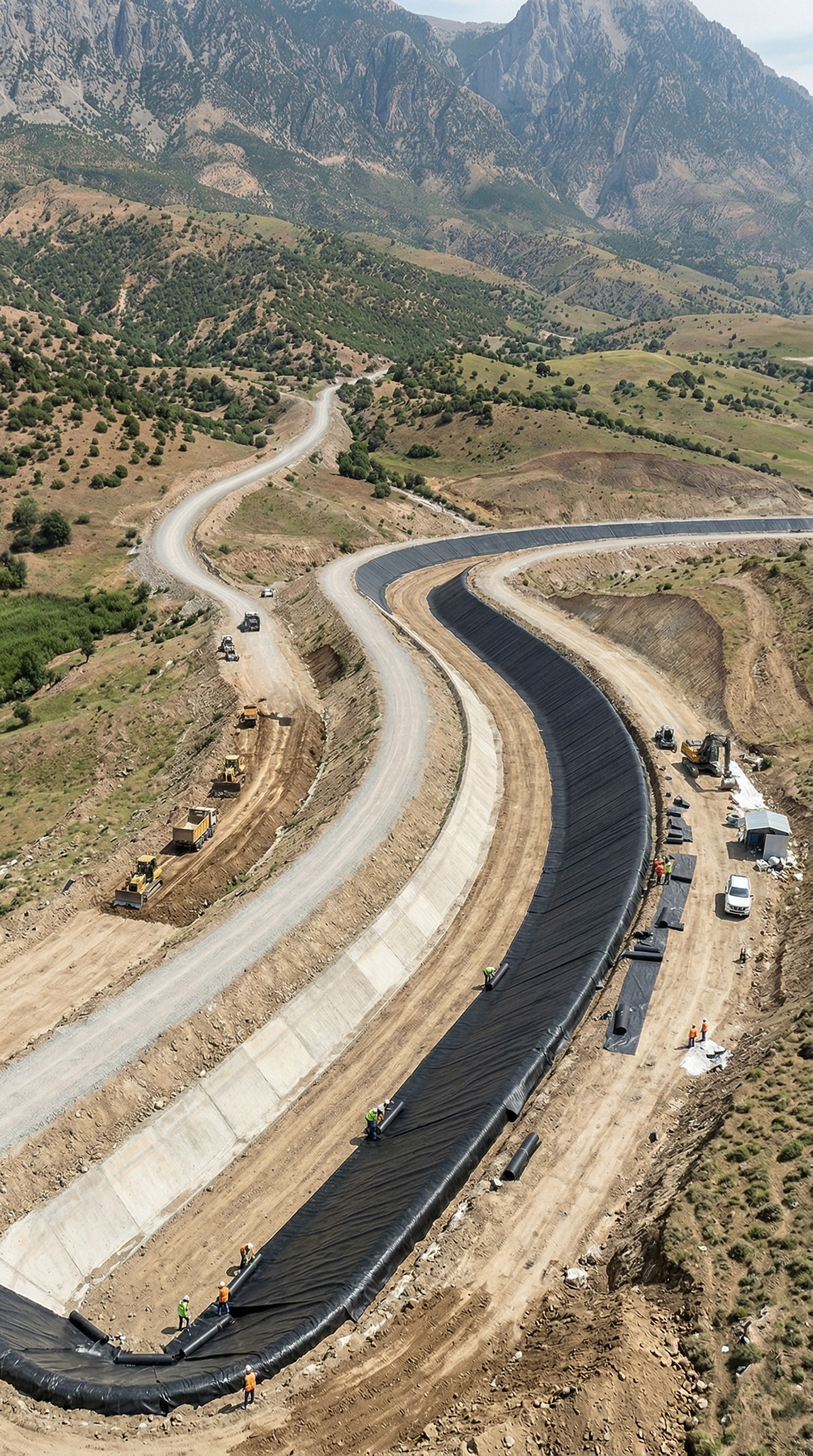
Geomembrane Laying: The geomembrane placed on the channel base and side surfaces is carefully laid. Edge joints are sealed with a welding machine.
Accessories and Details: Accessories such as drainage pipes and control valves are added to balance the water level of the channel.
Soil Filling and Closure: The channel is closed by filling soil over the geomembrane. Soil filling holds the geomembrane in place and prevents leaks by balancing water pressure.
Advantages of Geomembrane Applications in Water Conveyance Channels:
Water Conservation: Preventing water seepage minimizes irrigation water loss.
Irrigation Efficiency: Reducing leaks increases irrigation efficiency.
Prevention of Soil Erosion: It prevents soil erosion and movement along the channel edges.
Protection of Water Quality: It prevents water that seeps into groundwater from contaminating underground waters.
Longevity: Geomembrane application extends the life of the channel and reduces maintenance needs.
Energy and Cost Savings: Preventing irrigation water seepage saves energy and reduces costs.
Geomembrane applications in water conveyance channels are an important step for the sustainable management of irrigation systems and water resources. Effective use and protection of water resources are achieved through proper material selection, professional installation, and regular maintenance.
Geomembrane Material Selection:
Choosing the material used in geomembrane application is crucial for project success. Typically, thermoplastic polymers such as polyethylene (PE), polypropylene (PP), and polyvinyl chloride (PVC) are used. Material selection should be based on factors such as the chemical properties of the water, temperature variations, and mechanical durability.
Geomembrane Thickness: The thickness of the geomembrane material is determined based on the project’s requirements and expectations. Higher thickness can provide greater mechanical durability but may also increase cost. Typical geomembrane thicknesses can range from 0.5 mm to 2.5 mm.
Geomembrane Lining and Welding: The geomembrane material is carefully laid over the channel floor and side surfaces. Edge joints are sealed to ensure watertightness. These welds are usually performed using hot air or seamless welding methods.
Drainage and Collection Systems: Drainage and collection systems are added to the top or sides of the channel. These systems collect rainfall and seepage water and direct it for processing.
Channel Geotextiles: Geotextile materials placed on the channel floor and side surfaces protect the geomembrane from physical damage and facilitate waste placement.
Testing and Quality Control: Watertightness tests are performed before and after geomembrane installation. These tests measure the success of the material and installation in terms of watertightness and durability.
Environment and Sustainability: Because geomembrane application prevents water seepage, it protects water resources and prevents soil contamination. This is of great importance for environmental protection and sustainability.
Soil Filling and Closure: The channel is closed by filling soil over the geomembrane. Soil filling holds the geomembrane in place and prevents leaks by balancing water pressure.
Advantages of Geomembrane Applications in Water Conveyance Channels:
Water Conservation: Preventing water seepage minimizes irrigation water loss.
Irrigation Efficiency: Reducing leaks increases irrigation efficiency.
Prevention of Soil Erosion: It prevents soil erosion and movement along the channel edges.
Protection of Water Quality: It prevents water that seeps into groundwater from contaminating underground waters.
Longevity: Geomembrane application extends the life of the channel and reduces maintenance needs.
Energy and Cost Savings: Preventing irrigation water seepage saves energy and reduces costs.
Geomembrane applications in water conveyance channels are an important step for the sustainable management of irrigation systems and water resources. Effective use and protection of water resources are achieved through proper material selection, professional installation, and regular maintenance.
Geomembrane Material Selection:
Choosing the material used in geomembrane application is crucial for project success. Typically, thermoplastic polymers such as polyethylene (PE), polypropylene (PP), and polyvinyl chloride (PVC) are used. Material selection should be based on factors such as the chemical properties of the water, temperature variations, and mechanical durability.
Geomembrane Thickness: The thickness of the geomembrane material is determined based on the project’s requirements and expectations. Higher thickness can provide greater mechanical durability but may also increase cost. Typical geomembrane thicknesses can range from 0.5 mm to 2.5 mm.
Geomembrane Lining and Welding: The geomembrane material is carefully laid over the channel floor and side surfaces. Edge joints are sealed to ensure watertightness. These welds are usually performed using hot air or seamless welding methods.
Drainage and Collection Systems: Drainage and collection systems are added to the top or sides of the channel. These systems collect rainfall and seepage water and direct it for processing.
Channel Geotextiles: Geotextile materials placed on the channel floor and side surfaces protect the geomembrane from physical damage and facilitate waste placement.
Testing and Quality Control: Watertightness tests are performed before and after geomembrane installation. These tests measure the success of the material and installation in terms of watertightness and durability.
Environment and Sustainability: Because geomembrane application prevents water seepage, it protects water resources and prevents soil contamination. This is of great importance for environmental protection and sustainability.
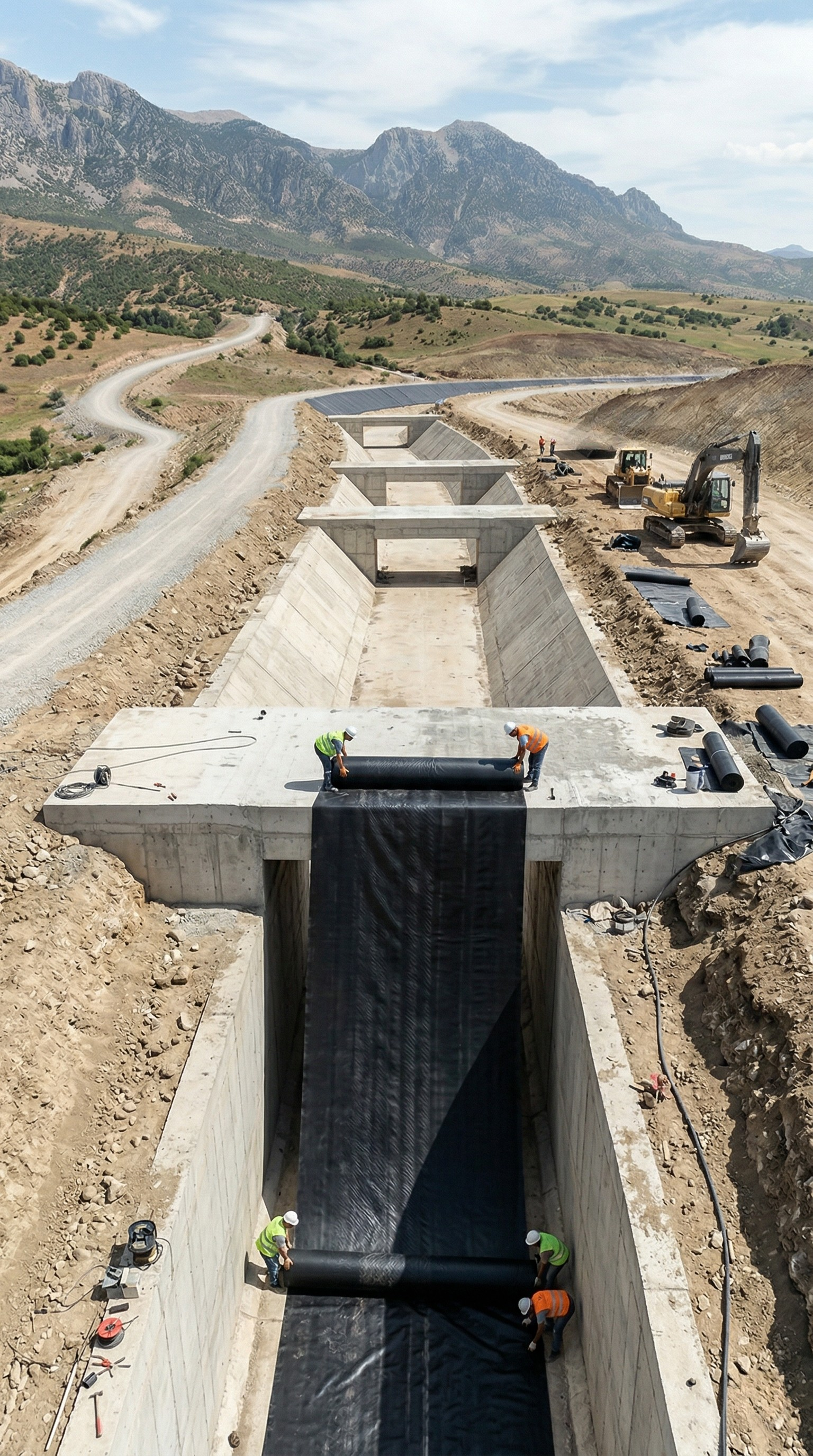
Work Safety and Equipment: Safety measures must be taken during the implementation process. Welding machines, testing equipment, and other necessary tools are used. The application of geomembranes in water transmission channels is a sophisticated technique used to manage water efficiently, prevent water loss, and protect the environment. The success of the project requires proper material selection, professional application, and regular maintenance.
When Did the Application of Geomembranes in Water Transmission Channels First Begin?
It is difficult to pinpoint the exact date of the first use of geomembranes in water transmission channels, but the foundations of this technology were laid in the 1960s. At that time, the need for transporting, storing, and sealing water increased with the growth of agricultural irrigation and water management projects. Geomembranes began to be used to prevent water loss, stop soil contamination, and improve water management. Initially, such applications were carried out with simpler materials and methods. However, with advances in material science and technology, more durable, flexible, and chemically resistant geomembrane materials began to be produced, making more effective sealing possible.
Geomembrane applications became more widespread in the 1970s and 1980s. In particular, the increase in industrial and environmental regulations and the necessity to protect water resources made the use of geomembranes even more important. Today, because sustainable use of water resources and environmental protection are important issues, geomembrane applications in water transmission channels have become more sophisticated and continue to be used in various sectors. This application is considered one of the modern engineering solutions that enable effective water management.
Which Countries Are Widely Used?
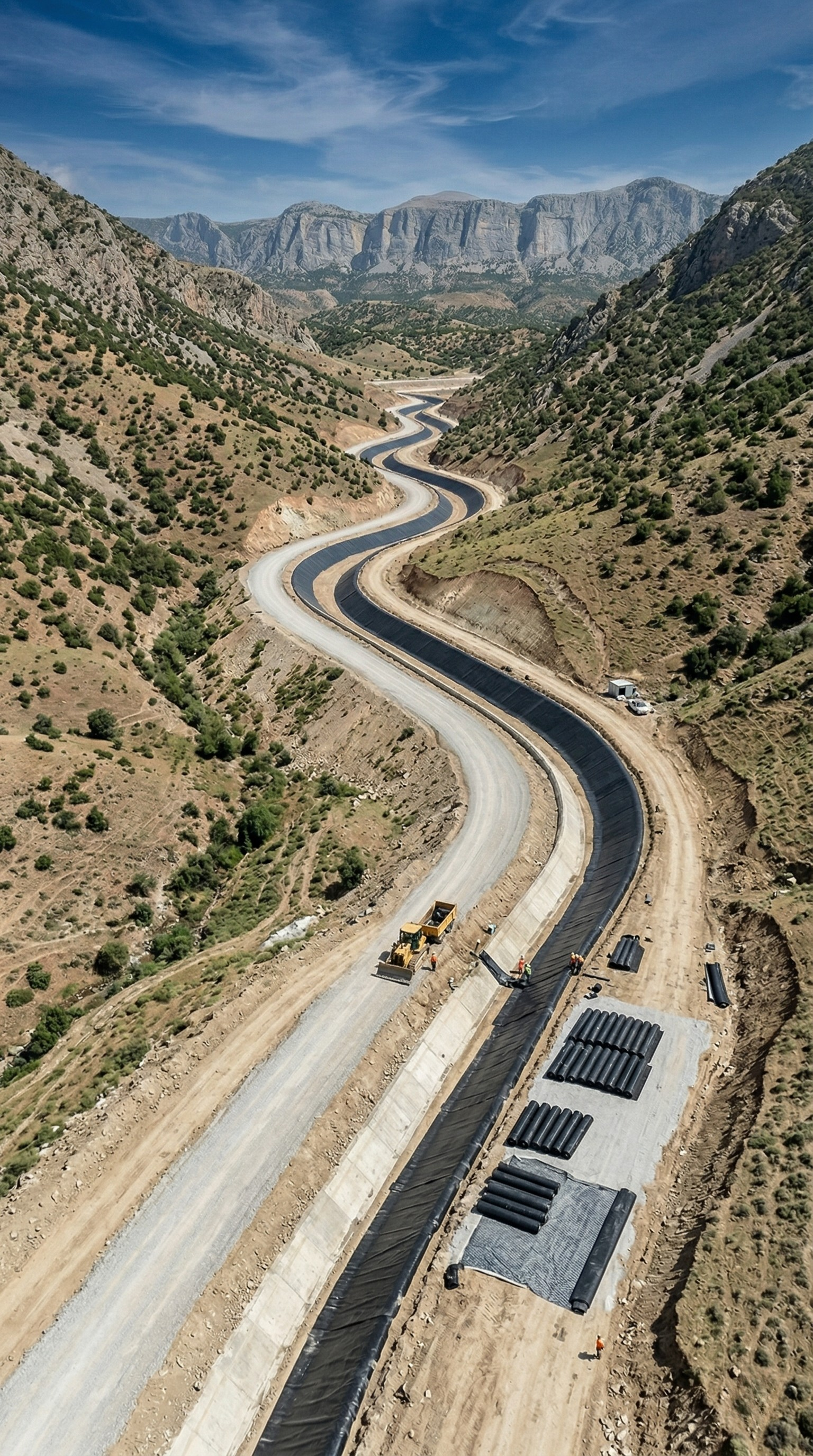
Geomembrane applications in water conveyance channels are widely used worldwide for water resource management and environmental protection purposes. They are especially common in areas where irrigation systems and water storage infrastructure exist. Here are some countries where geomembrane applications in water conveyance channels are commonly used:
**United States:** Geomembrane applications are common in the U.S. due to irrigation projects, industrial water management, and environmental protection.
**Australia:** With limited water resources, Australia frequently turns to geomembrane applications to ensure efficient water use.
**Spain:** Geomembrane applications widely used in irrigation and agriculture sectors are employed to ensure effective water use.
**India:** Geomembrane applications are also needed in India for irrigation projects and water management.
**Turkey:** In Turkey, where agriculture is an important sector, geomembrane applications are used in irrigation projects and water storage areas.
**China:** Irrigation projects and water resource management lead to the widespread use of geomembrane applications in China.
**South Africa:** Geomembrane applications are encountered in South Africa due to irrigation, mining, and industrial water management projects.
**Mexico:** Irrigation systems and water storage structures in Mexico require the use of geomembrane applications for the protection of water resources.
**Brazil:** Geomembrane applications are also needed in Brazil due to agriculture, energy production, and mining projects.
**North African Countries:** In arid regions, geomembrane applications are common for water management projects and irrigation systems to ensure effective water use.
In these countries, geomembrane applications in water conveyance channels are needed for sustainable water resource management and environmental protection. The reason for the widespread adoption is the need for modern engineering solutions to ensure effective use of water resources and prevent environmental pollution.
**Costs of Geomembrane Applications in Water Conveyance Channels**
The costs of geomembrane applications in water conveyance channels can vary depending on a number of factors. These factors include the scale of the project, the materials used, the geographic characteristics of the area, soil conditions, labor costs, and other variables. Here are some factors that affect the cost of geomembrane applications in water conveyance channels:
**Project Scale:** The scale of the project, such as channel length, width, and depth, directly affects material and labor costs.
**Geomembrane Material:** The type and thickness of the geomembrane material used influence costs. More durable and specialized materials are generally more expensive.
**Soil Conditions:** If the soil needs to be leveled, compacted, or otherwise treated, this can lead to additional costs.
**Earth Filling and Closure:** After the geomembrane application, filling the channel with earth and closing it also affects costs.
**Labor and Equipment:** Labor and equipment costs can significantly impact the project budget.
Geographic Conditions: Implementation in difficult or mountainous terrain may require more labor and equipment.
Technology and Methods: The source methods used, tests, and quality control processes can also affect costs.
Licenses and Permits: Licenses, permits, and regulations required for project execution can also lead to additional costs.
Climate Conditions: Climate conditions (e.g., extreme temperatures or rainfall) can affect the project's schedule, which can increase costs.
Drainage and Collection Systems: The cost of additional components such as drainage and collection systems also affects the budget.
In general, the costs of geomembrane application in water transmission channels are project‑specific. Choosing the right materials, efficient labor management, and well‑planned projects are important for reducing costs. Depending on the details of your project, it would be more accurate to conduct an estimated cost analysis by working with an engineer or specialist. The reasons our customers choose us are based on the values we offer, service quality, and competitive advantages. Why should you choose us for geomembrane applications in water transmission channels?
Expertise and Experience: We work with a team that is expert and experienced in the field. The knowledge and experience we have in geomembrane applications allow us to manage your projects in the best possible way.
Customized Solutions: Every project has its own unique needs. By understanding our customers' needs, we provide customized solutions.
Excellent Service Quality: We carry out your projects with high‑quality materials and professional workmanship. Our excellent service quality ensures that your projects are completed successfully.
Competitive Prices: We provide high‑quality service and help protect your budget by offering competitive prices.
Technological Solutions: We implement your projects using the latest technologies and the most up‑to‑date methods. This allows you to achieve more efficient and effective results.
References and Reputation: Thanks to our customers' satisfaction and our successful projects, we have a good reputation. This can be a strong reason for you to choose us.
Customer Communication: We are in constant communication to understand customer requests and solve problems with proper communication.
Environment and Sustainability: We demonstrate our commitment to protecting the environment and leaving a better world for future generations by offering sustainable solutions.
Project Management: We manage projects effectively and deliver them on time. This allows you to maintain your plans.
Customer Satisfaction: Our customers' satisfaction and the success of our projects are our priority. Therefore, your satisfaction is our most important priority.
For the reasons mentioned above, choosing us for geomembrane applications in water transmission channels is the right choice to ensure the successful completion of your projects and the sustainable management of water resources.
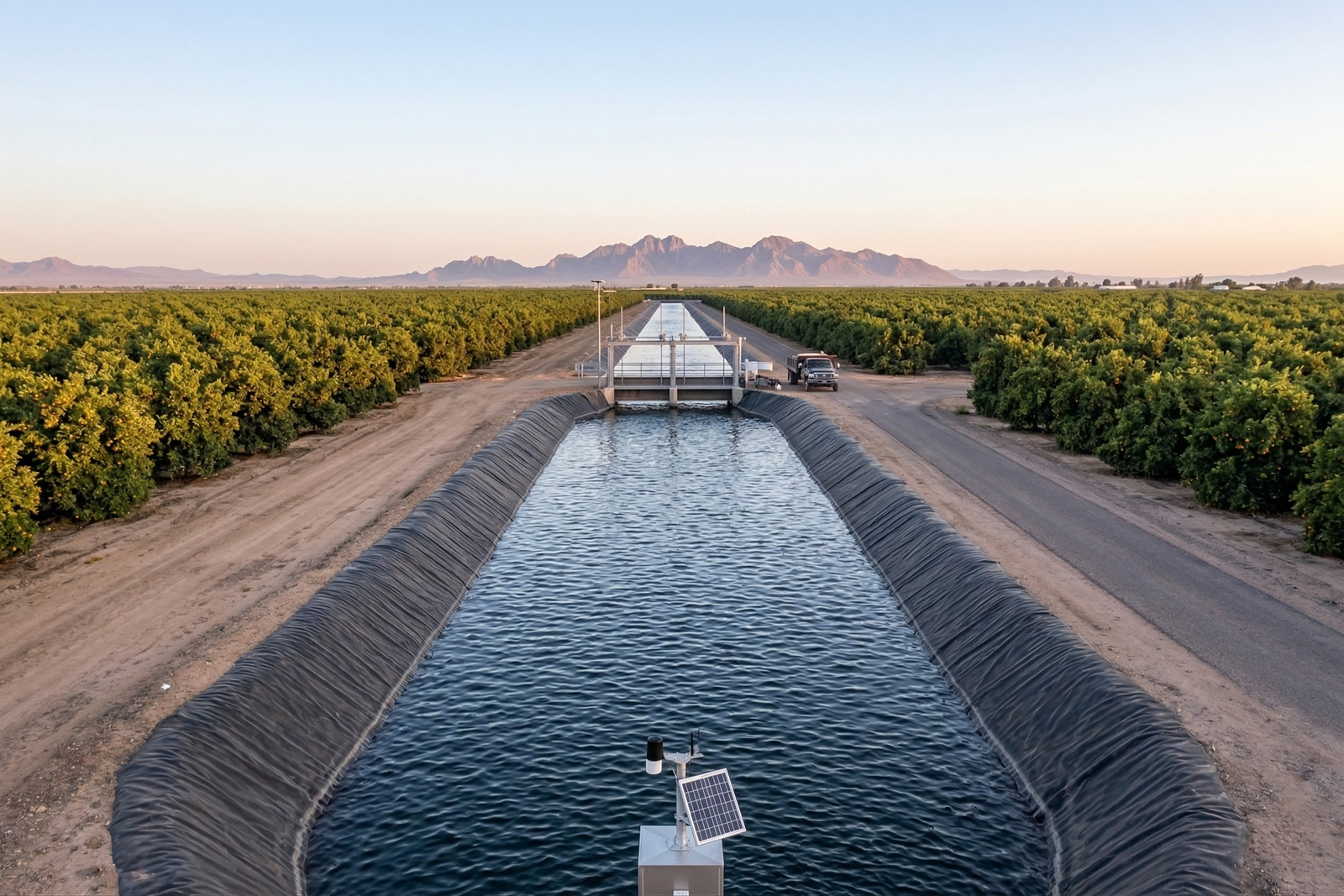
Cost advantages of geomembrane applications in water conveyance channels:
Water savings and productivity increase:
With traditional methods, water loss can be between 20% and 50%, while with geomembrane applications, this loss can be reduced to as low as 5%. Water savings and productivity increase can lead to a 10% to 30% reduction in annual irrigation water costs.
Maintenance and repair costs:
Geomembrane applications are longer lasting and require less maintenance. For example, annual maintenance costs are 100,000 TL with traditional methods, but with geomembrane applications, this amount can drop to 25,000 TL.
Prevention of soil erosion:
With geomembrane applications, soil erosion can be reduced by up to 90%. This can significantly lower the annual costs spent on combating erosion.
Energy and labor savings:
Reducing leaks in water conveyance channels can reduce pumping needs, leading to 15% to 25% savings in energy costs. Labor costs with traditional methods are 100,000 TL, but with geomembrane applications, this cost can drop to 50,000 TL.
Prevention of soil pollution:
Because the risk of soil pollution is reduced, soil cleaning and treatment costs can decrease by 10% to 20% annually.
Longevity and cost comparison:
With traditional methods, the channel lifespan is 10 years, while with geomembrane applications, this period can extend to 25 years. When a total cost analysis is performed, the total life‑cycle cost of geomembrane applications can be 20% to 30% lower than that of traditional methods.
These numerical data demonstrate the cost advantages of geomembrane applications in water conveyance channels. Cost savings have a significant impact on long‑term value creation and sustainability.