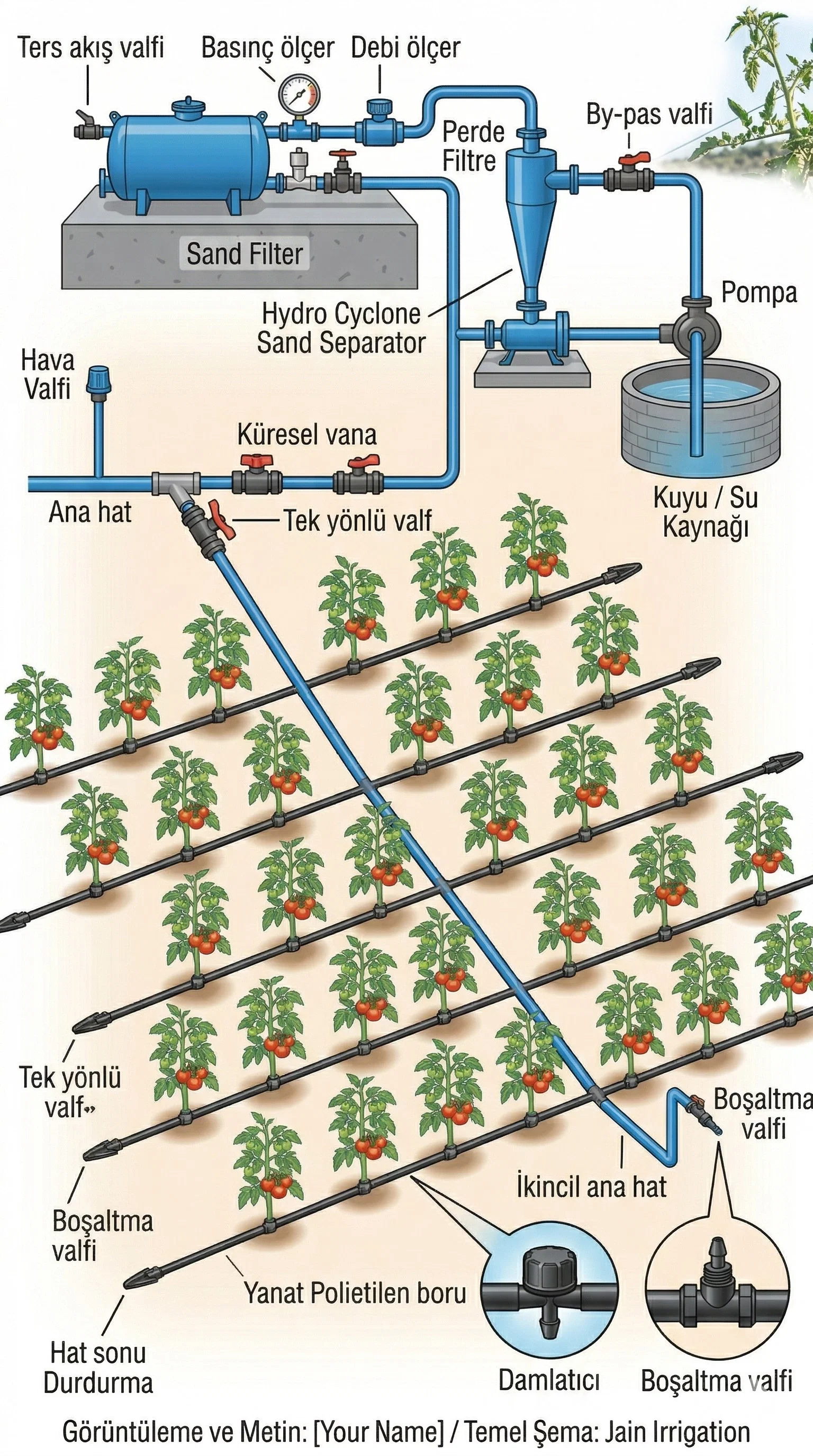
Drip irrigation is an application where water drips from pipes laid across the field. Water is applied drop by drop to the root zone or near it, ensuring it falls exactly where the roots are located. This method can be the irrigation technique with the highest water efficiency, and if managed properly, evaporation and runoff are minimized. When managed correctly, irrigation water efficiency typically ranges from 80 to 90 percent.
In modern agriculture, drip irrigation is often combined with plastic mulch to further reduce evaporation, and it also serves as a fertilizer delivery system. This process is known as fertigation.
If a drip system operates for a very long time or the distribution volume is too high, deep infiltration can occur where water moves below the root zone. Drip irrigation methods range from highly advanced, computer-controlled systems to low-tech, labor-intensive ones. Except for low-energy center pivot systems and surface irrigation systems, most other systems generally require lower water pressures than those used in other irrigation methods. A system can be designed to provide precise water distribution to individual plants in a field that may contain a single crop type or a mix of plant species. Although adjusting pressure on steep slopes can be difficult, pressure-balancing emitters are available, so the area does not need to be flat. Advanced technology solutions include precisely calibrated emitters located along pipe lines extending from a computer-controlled valve group.
Drip irrigation systems are defined as an irrigation method where water is directly dripped onto plants in agricultural areas through low-pressure pipes and specialized absorbers. These systems ensure efficient use of water and prevent waste by delivering water directly to the plants. Drip irrigation is widely used in arid regions, greenhouse agriculture, and garden watering. Here are the basic features and advantages of drip irrigation systems:
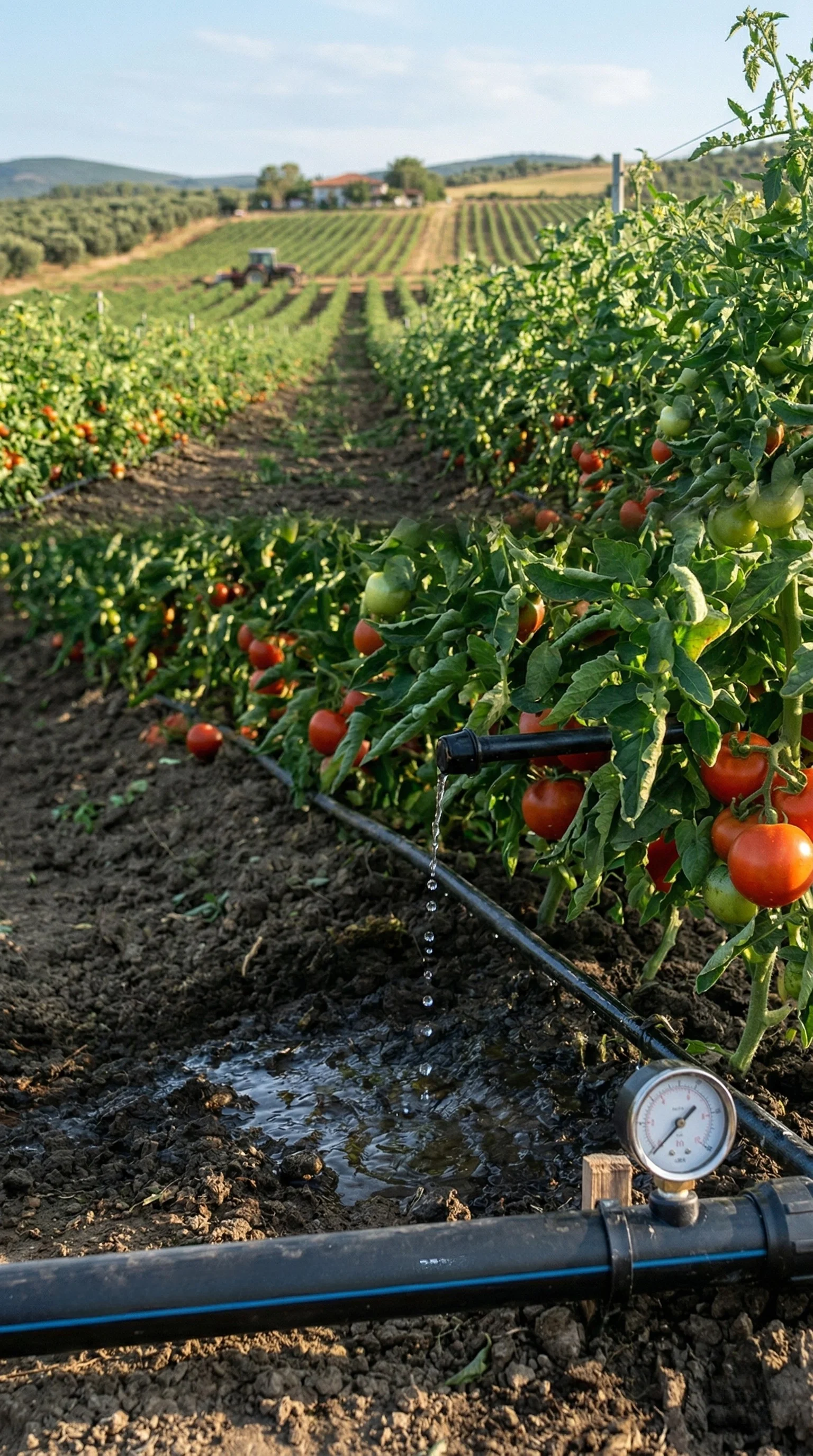
Features of Drip Irrigation Systems:
Drip Pipes:
The main component of a drip irrigation system is low‑pressure pipes that carry water to plants. These pipes have holes or emitters placed at specific intervals.
Emitters or Drip Points:
The holes or emitters on the drip pipes allow water to drip slowly onto the plants. Water is distributed directly and precisely to the plants.
Filters:
Drip irrigation systems include filters to prevent particles and contaminants in the water. These filters prevent emitter clogging and maintain water quality.
Pump:
For large irrigation areas, a pump may be required to pump water through the pipes and provide pressure.
Timing and Control Systems:
Drip irrigation systems may include timing and control units to regulate when and for how long water is delivered. This allows irrigation programs to be adjusted.
Pipe Laying:
Drip pipes can be laid over or under the agricultural area. Subsurface drip irrigation minimizes water loss and prevents contact of water with the plants.
Advantages of Drip Irrigation Systems:
Water Conservation:
Drip irrigation conserves water by delivering it directly to plants and preventing water waste.
Plant Health:
Since water is given directly to the root zones, plant health and productivity increase.
Effective Use of Chemicals and Fertilizers:
Drip irrigation allows chemicals and fertilizers to be applied more effectively and precisely.
Prevents Soil Erosion:
The slow water flow prevents soil erosion and reduces soil loss.
Energy and Labor Savings:
Drip irrigation automates the irrigation process and saves energy and labor compared to manual irrigation methods.
Drought Tolerance:
Drip irrigation is ideal for growing plants in areas with limited water resources or arid regions.
Drip irrigation systems offer plant growers the opportunity to increase efficiency and use water resources more sustainably. Therefore, it is a preferred irrigation method, especially in areas where water resources are limited.