Sealing in Animal Waste Storage and Biogas Ponds
Modern Waste Management and Environmental Sealing Discipline in Modern Livestock Operations In industrial livestock facilities, one of the most critical pillars of operational success is the proper management of waste generated during the production process in accordance with legal and environmental standards. Animal waste accumulated in beef, dairy, and poultry farms poses a serious threat to groundwater and soil health due to the high levels of nitrogen, phosphorus, and pathogenic microorganisms it contains.
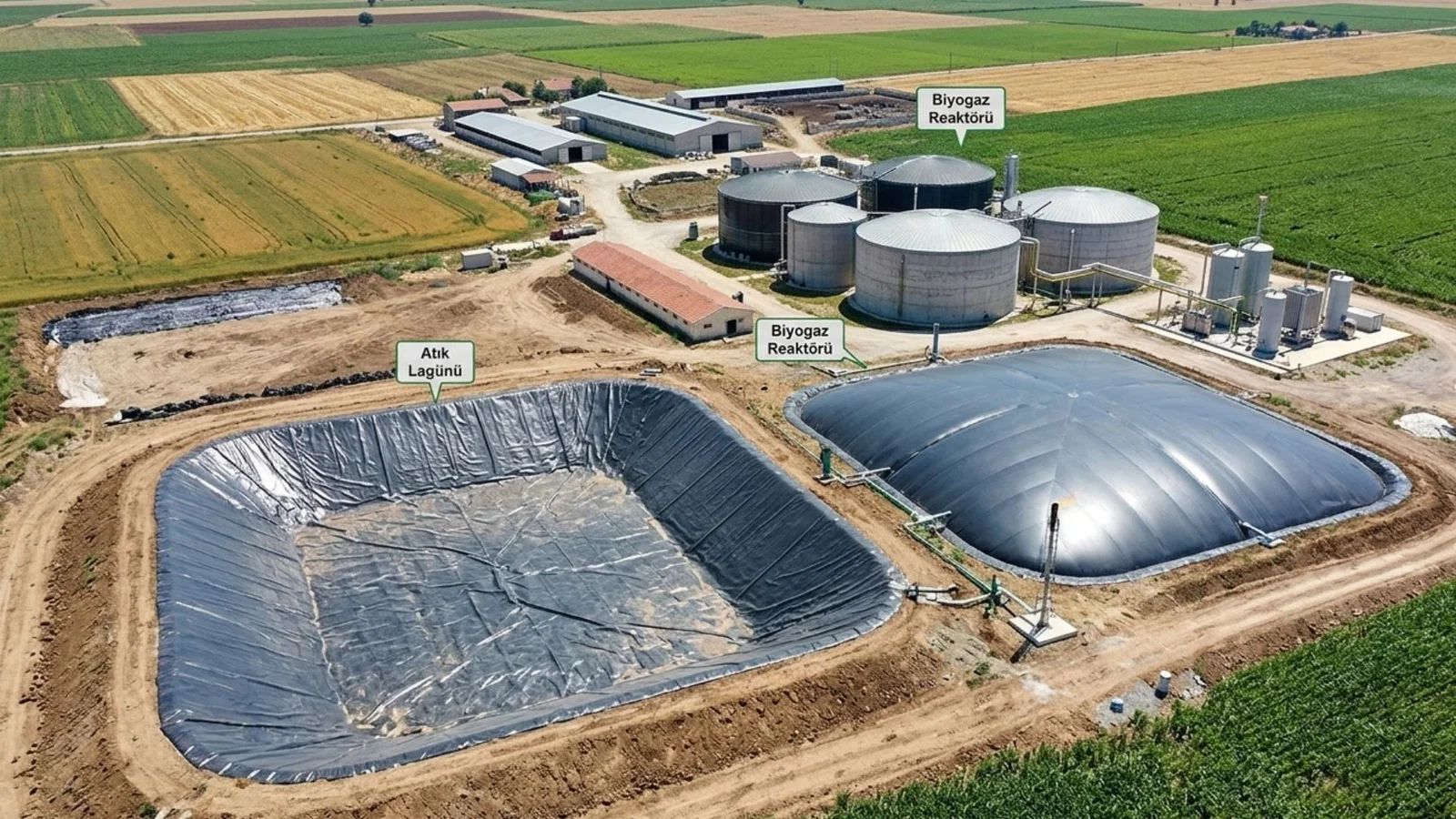
Making the lagoons and collection ponds where this waste is stored watertight is not only an environmental protection activity but also an engineering practice essential for the continuity of the business license and public health. Geomembrane technology provides the most durable and economical sealing barrier against the corrosive effects of animal waste, enabling facilities to achieve a sustainable structure.
The high‑density polyethylene (HDPE) solutions we offer at MZ Ticaret prevent uncontrolled infiltration of wastewater into the soil, thereby protecting the ecosystem. A modern livestock facility is one that manages its waste correctly and minimizes its environmental footprint.
Chemical Aggressiveness of Animal Waste and Geomembrane Barrier Selection Animal waste is naturally rich in ammonia, sulfur compounds, and various organic acids, giving it a highly aggressive chemical composition. Reinforced concrete ponds or soils compacted only with clay lose resistance over time to these chemicals; cracks and corrosion develop in concrete, while clay layers begin to seep.
HDPE geomembranes, thanks to their high chemical inertness, do not allow the molecular structure of these organic acids and gases to degrade. In MZ Ticaret’s technical specifications, geomembranes with high carbon black content and enhanced oxidation resistance are recommended for waste ponds.
The material’s flexibility preserves the system’s integrity against temperature changes and gas pressure during fermentation. Correct material selection ensures that the waste pond not only remains watertight but also continues to function structurally for decades.
Chemical resistance is the cornerstone of safety in waste management. Impact of Sealing on Energy Efficiency in Biogas Production Facilities In biogas plants where animal waste is converted into energy, sealing is not just an environmental measure but a parameter that directly affects production efficiency.
Even a small gas or liquid leak in biogas reactors or fermentation ponds reduces methane output, lowering the plant’s profitability. Geomembrane insulation turns biogas ponds into a completely closed circuit, preserving the anaerobic environment.
The sealing systems we apply in biogas projects flawlessly seal both the bottom and the side surfaces of the pond. Gas sealing is essential for maintaining pressure balance inside the pond and optimizing microbial activity.
In a sealed system, collected methane yields higher energy output, shortening the plant’s payback period. Energy production is a process of rising efficiency on a flawless insulation layer.
Ground Preparation and Excavation Geometry Standards for Waste Lagoons Ground preparation is the most critical stage that determines the lifespan of insulation in the construction of animal waste storage ponds. The base and slopes of the excavated area must be cleared of any plant roots, sharp stones, and construction debris that could damage the geomembrane.
Compressing the soil with cylinders and achieving a smooth surface prevents material perforation when water and waste load the pond. MZ Ticaret’s field engineers ensure that slope angles in lagoon designs are suitable for geomembrane stability.
High‑grade geotextile protective blankets laid over the compacted soil surface create a soft cushioning layer for the geomembrane, enhancing mechanical safety. Neglect during ground preparation can cause irreversible physical damage when the pond is full.
A solid infrastructure foundation is the bedrock of the sealing system to be built on. Heat‑Welding Technology and Stitch Quality Control in Waste Ponds In large‑scale animal waste ponds, geomembrane rolls are joined with specialized automatic fusion welding machines.
During this process, the double‑stitch weld line between two sheets should become the system’s strongest point. MZ Ticaret works with a “zero‑error” principle in field applications, subjecting each weld seam to air‑pressure tests.
Because even a second of leakage in waste ponds is unacceptable, welders’ certification level and machine calibration are critical. Detail welds performed with hand extruders at corner details, pipe entries, and valve room connections complete the system’s integrity.
Heat‑welding technology fuses the geomembrane to the pond’s shape, creating a single‑piece structure that eliminates leakage risk. Technical discipline and test protocols bring field craftsmanship under engineering guarantee.
Ammonia Resistance and Biological Aging Performance of Polyethylene Barriers High concentrations of ammonia in animal waste gradually embrittle many synthetic materials, leading to breakage. HDPE geomembranes are among the most chemically resistant polymers at the molecular level against ammonia and similar nitrogenous compounds.
Products supplied by MZ Ticaret have proven, in long‑term aging tests conducted in laboratory conditions, that they retain flexibility and tensile strength even under ammonia exposure. Biological aging resistance is vital for a waste pond to function for decades in a moist, aggressive underground environment.
Special antioxidant packages and UV stabilizers added to the material protect not only the surface but all layers of the membrane. This biological and chemical resistance spares investors from renewal costs and ensures the plant’s long‑term environmental safety.
Design of Gas Venting and Drainage Systems in Waste Ponds Before geomembrane installation, gases (methane, carbon dioxide) or water that may accumulate underground must be vented to ensure system safety. Gases trapped underground can form a “balloon” (whale) under the geomembrane when the pond empties, causing material tension and weld failure.
MZ Ticaret recommends installing gas venting drains or geocomposite drainage layers beneath the geomembrane in waste pond projects. These systems direct accumulated pressure underground to vent pipes, keeping the insulation layer firmly attached to the ground.
Gas management is critical not only for methane production inside the pond but also for the mechanical stability of the insulation layer. Drainage systems act like an invisible safety net, protecting the barrier from unexpected physical pressure.
Floating Cover Systems for Odor and Vapor Control Odor released from animal waste lagoons can be a major problem for plant workers and nearby residents. Additionally, evaporation from the pond surface can destabilize the waste volume.
The floating cover systems offered by MZ Ticaret completely seal the pond, reducing odor emission by up to 90%. These covers are flexible, able to lower and raise with the waste level, and prevent rainwater from mixing with waste, thereby reducing disposal costs.
In biogas production, these covers create a sealed volume that captures gas, allowing energy storage. Floating cover technology is an innovative approach that transforms open lagoons into modern, controllable closed storage units.
Odor control and gas capture capacity simultaneously elevate the plant’s environmental image and operational efficiency. Maintenance, Repair, and Operational Ease in Animal Waste Ponds Geomembrane‑lined waste ponds require far less maintenance than reinforced concrete structures.
The smooth surface makes it easy to clean solid waste and sludge that accumulate on the pond bottom. If the pond needs to be drained during cleaning, the geomembrane surface can be quickly cleaned with high‑pressure water.
MZ Ticaret provides rapid repair services for potential accidents or mechanical damage that may occur during operation. Small tears or holes in the material can be patched quickly with hand‑welding equipment.
This repair convenience ensures continuous sealing without stopping plant operations. Low operating costs and rapid response capabilities align perfectly with livestock facilities’ profitability goals.
Maintenance ease is where engineering design meets operational success. Legal Regulations, Environmental Inspections, and Zero‑Leakage Target Regulations issued by the Ministry of Agriculture and Forestry and the Ministry of Environment, Urbanization and Climate Change subject livestock facilities’ waste management to strict oversight.
Sealing reports for waste ponds and geomembrane test results are mandatory documents required when obtaining environmental permits. MZ Ticaret’s internationally standard test reports and quality certificates ensure smooth audit processes for businesses.
The zero‑leakage goal is not only a legal obligation but also a responsibility to leave clean water resources for future generations. Technical transparency and application quality presented in audits demonstrate the company’s corporate reputation and professional management.
Legal compliance, combined with the right partner and material selection, turns the business from a burden into a confidence factor. Cost‑Benefit Analysis and Depreciation in Waste Management Investments A project to isolate a livestock waste pond with a geomembrane may initially appear as a cost item, but it is actually the greatest insurance against massive environmental compensation and cleanup costs awaiting the business.
The cost of rehabilitation work if groundwater becomes contaminated can reach ten times the original insulation cost. Additionally, converting collected gas in biogas plants into energy allows the insulation investment to pay itself off within a few years.
MZ Ticaret offers investors the most economical yet uncompromising safety‑focused sectional designs, optimizing budgets. Long‑term operating costs, low maintenance needs, and elimination of legal penalty risk make geomembrane use the most rational financial choice.
Economic efficiency starts with quality in sealing. International GRI‑GM13 Standards and Quality Assurance The quality of geomembranes used in animal waste ponds is the most important factor determining the project’s overall success.
HDPE geomembranes supplied by MZ Ticaret meet all requirements of the globally stringent GRI‑GM13 specifications. These standards keep every stage—from raw material to final physical properties—under inspection.
Using non‑standard products in an aggressive environment like a waste pond can cause material breakdown and leakage within a few years. Quality assurance finds its true meaning when combined with field welding discipline and meticulous application.
Every square meter of geomembrane selected and applied in accordance with engineering discipline guarantees the plant’s long‑term safety. Local Community Relations and Social Responsibility Dimension The relationship between large‑scale livestock facilities and surrounding settlements is often a delicate balance due to odor and environmental pollution concerns.
Professionally sealed and odor‑controlled waste ponds positively influence the business’s relations with neighbors. In the projects we conduct at MZ Ticaret, we value the contribution of environmental sensitivity to the company’s social image.
Social acceptance and local development goals should be supported by a production model respectful of nature. Sealing measures are the most tangible indicator of the business’s value placed on the environment and people.
A socially responsible facility sets an example both regionally and sectorally. Biogas and Sealing Strategy in the Fight Against Climate Change Animal waste emits methane, which is twenty times more harmful than carbon dioxide when released into the atmosphere.
Collecting these wastes in sealed ponds and converting them into biogas is one of the most effective methods to combat global warming. MZ Ticaret’s sealing solutions prevent methane from escaping into the atmosphere, contributing to climate goals.
Sustainable agriculture and livestock integrate energy recovery and environmental protection into a single model. The geomembrane insulation, the fundamental physical component of this model, is the key technology that turns waste from an environmental problem into an energy source.
In the future, livestock will rise through facilities that are environmentally friendly and energy‑producing. Innovation in Future Waste Management Technologies and MZ Ticaret’s Vision In a digitized world, waste ponds are also equipped with smart systems.
Remote monitoring sensors allow real‑time tracking of pond fill levels, leak conditions, and gas pressures. MZ Ticaret integrates this technological shift into sealing solutions, offering investors “smart insulation” packages.
With our innovation‑focused approach, we continue to develop the most durable, quickly deployable, and environmentally friendly systems the livestock sector needs. Waste management is now not just storage but a data management and efficiency process.
Every project designed with MZ Ticaret’s expertise sets tomorrow’s standards for modern livestock today. Every step taken with technical excellence and environmental sensitivity is the firmest foundation for a cleaner world and more profitable production.