LDPE and LLDPE geomembranes: Critical Projects Where Flexibility Is Needed
Foundations and Molecular Structure of Low-Density Polyethylene Geomembrane Technology Polymer science optimizes the balance between material density and flexibility according to project needs in the solutions it offers to civil engineering. At this point, LDPE and LLDPE geomembranes stand out for having a more branched molecular structure, unlike the high rigidity offered by high-density polyethylene.
LDPE is produced by a high-pressure polymerization process and has a structure with long side chains; this gives the material extraordinary softness and resistance to folding. LLDPE, on the other hand, offers a linear structure with short, uniform side chains resulting from the copolymerization of ethylene with alpha-olefins.
This structural difference allows LLDPE geomembranes to be as flexible as LDPE while also exhibiting a tensile strength and puncture resistance close to HDPE. At MZ Ticaret, the flexible geomembrane solutions we provide in our projects are the most reliable engineering tools that ensure continuous impermeability in areas where the ground is irregular or dynamic movements are expected.
The material’s inherent flexibility allows polymer chains to glide more easily over one another, which dampens external mechanical stresses without causing permanent damage to the material. Reasons for Choosing LLDPE Geomembranes in Projects Where Flexibility Is Critical Construction sites do not always have perfectly flat or stable ground.
Loose soils, fill areas, or pile units in mining sites can settle severely under heavy loads. In such situations, rigid materials like HDPE can crack under local stresses and risk environmental stress fractures.
LLDPE geomembranes, thanks to their high elongation capacity, absorb ground movements, change shape without tearing, and maintain the impermeable barrier. The material does not become brittle even at very low temperatures, which is a major advantage in installations in regions with harsh winter conditions.
MZ Ticaret’s technical teams recommend LLDPE use as a safety standard in projects with a high settlement risk identified in ground investigation reports. This choice protects the impermeable system against structural deformations that may occur throughout the project’s operational life, acting like an insurance.
Flexibility also makes the material easier to shape during installation, preventing workmanship errors. Applications of LDPE and LLDPE in Multi-Layer Storage Systems In industrial plants and waste management centers, impermeability is rarely limited to a single layer.
In composite impermeable systems, different geomembrane types are used together for complementary properties. LDPE geomembranes are preferred for sealing temporary storage sites or secondary protection barriers.
Their light weight and easy spreadability allow rapid sealing of large areas. LLDPE is used safely in the upper cover systems of waste dams, as a gas barrier, or beneath drainage layers.
In sensitive ecosystems where groundwater protection is required, these flexible geomembranes form a more tolerant barrier against rock movements and root pressures. MZ Ticaret’s range of LDPE and LLDPE solutions in various thicknesses is customized according to each project’s specific risk analysis, creating the most effective insulation shield.
Layer compatibility minimizes the system’s overall permeability coefficient, maximizing environmental safety. Mining Sites: Pile Units and LLDPE’s Durability Mining operations are the toughest test field for geomembranes worldwide.
In pile unit methods where thousands of tons of ore are directly piled onto the geomembrane, the material faces massive static pressure and the corrosive effect of chemical solutions. LLDPE geomembranes’ puncture resistance and friction coefficient can compete with HDPE.
Especially LLDPE products with a rough surface structure prevent ore slippage in high-shear areas, enhancing occupational safety and operational efficiency. As a member of the polyethylene family, it shows full resistance to acidic or alkaline slurry solutions.
The LLDPE geomembranes we supply to the mining sector have proven their performance under the harshest field conditions in accordance with international quality standards. A single failure in the impermeable barrier could lead to valuable ore loss and irreversible environmental pollution, so the safety margin provided by flexibility is vital.
Thermal Expansion Management and Installation Advantages of Flexible Geomembranes One of the biggest physical challenges in geomembrane applications is the material’s thermal movement under the sun. HDPE geomembranes, due to their high coefficient of thermal expansion, wave significantly during the day and contract at night.
LDPE and LLDPE geomembranes respond more balanced to these expansion movements because of their lower crystallinity. During field installation, the material’s flexibility makes it easier to acclimate panels to each other and shape corner details for extrusion.
This increases installation speed while reducing the margin for workmanship errors. In MZ Ticaret’s application standards, the excess material left during the spread of flexible geomembranes combines with the material’s natural elasticity to minimize mechanical fatigue.
In pond projects with complex topography, LLDPE’s skin-like wrapping of the ground prevents voids under the insulation layer and ensures homogeneous distribution of water pressure. Use of LLDPE as a Gas Barrier in Waste Site Closure Systems When waste storage facilities reach the end of their life, methane gas buildup and rainwater infiltration must be controlled.
In the final cover or capping stage, LLDPE geomembranes are the ideal solution. As the waste mass decomposes and shrinks over time, continuous movement and settlement occur in the cover layer.
A rigid material would crack under these movements, whereas LLDPE geomembranes tolerate deformation and maintain gas impermeability. Integrated with gas collection systems, this geomembrane layer prevents greenhouse gas emissions and creates an airtight volume that allows methane to be converted into energy.
MZ Ticaret offers LLDPE solutions with surface textures suitable for the slope of the project and the vegetation work to be carried out, enabling the restoration of old waste sites into parks or recreational areas. High-Temperature Resistant LLDPE for Geothermal Energy and Hot Water Storage Some industrial processes and geothermal projects require the insulation material to contact high-temperature liquids.
Standard polyethylene softens above a certain temperature, but specially formulated LLDPE geomembranes can maintain structural integrity at continuous operating temperatures up to 60–70 °C. In hot water storage ponds or solar-powered saline water treatment plants, LLDPE’s resistance to thermal oxidation stands out.
Added antioxidant packages prevent polymer chain breakage at high temperatures and delay premature aging. MZ Ticaret offers geomembrane options with enhanced thermal durability to meet the specific needs of renewable energy projects, providing long‑lived and safe insulation strategies.
Heat‑storage efficiency directly depends on the barrier’s ability to retain heat and prevent leaks. Sensitivity to Installation Errors and Field Inspection of Flexible Geomembranes Because LLDPE and LDPE geomembranes are flexible, they can be more sensitive to physical damage on site than HDPE.
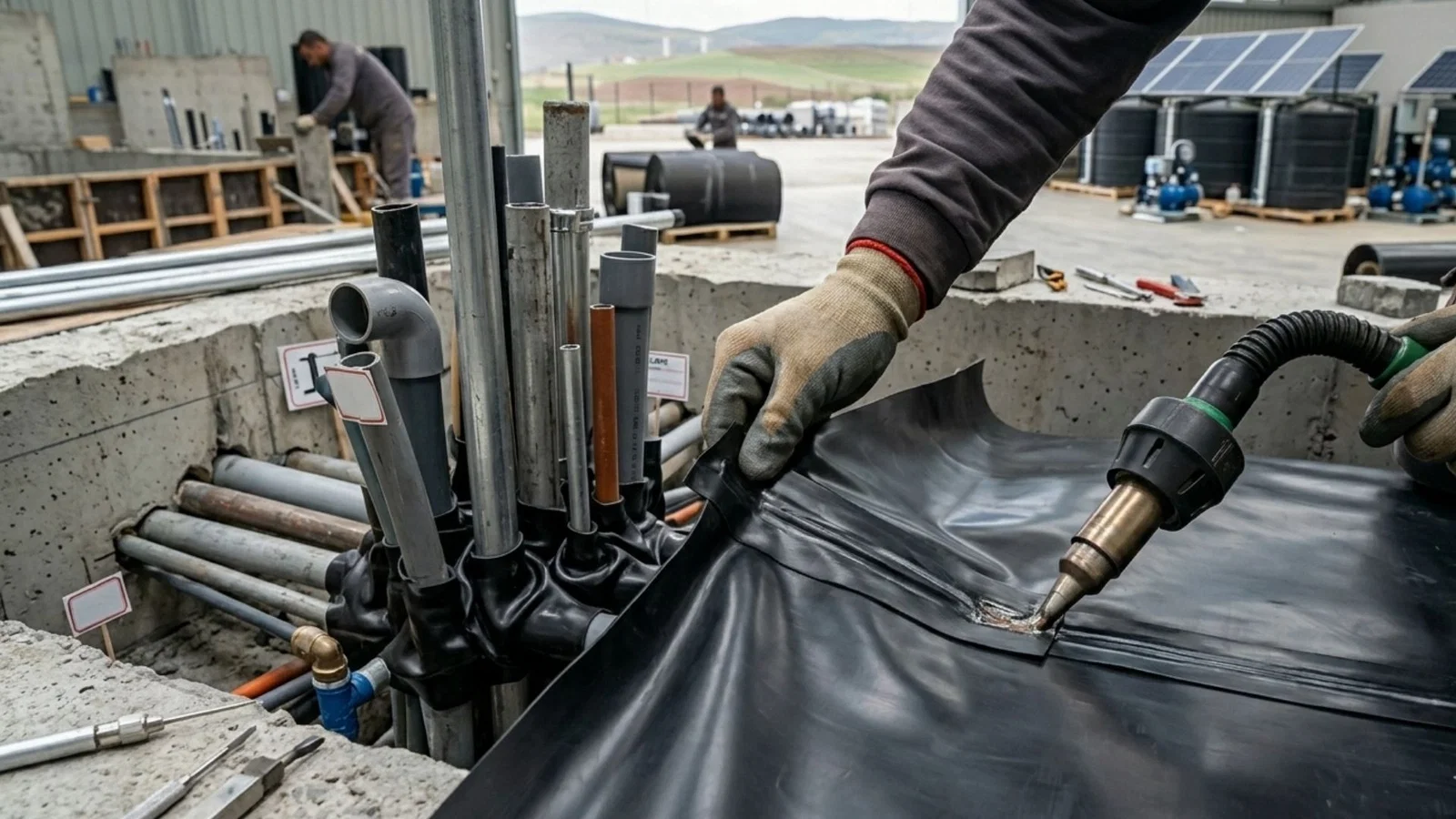
Therefore, field inspection and ground preparation must be stricter during installation. The material’s soft texture requires precise pressure and temperature settings on welding machines; excessive heat can distort the material, while insufficient heat can prevent fusion.
MZ Ticaret’s application teams apply air‑pressure and vacuum tests without compromise. The continuity of weld seams, combined with the material’s high elongation, maximizes overall system safety.
To prevent faulty spreading or careless filling, the grammage and spreading method of the protective geotextile layer on the geomembrane must be determined by engineering calculations. Field inspectors check each meter of weld for compliance with standards in real time.
Laboratory Tests and Compliance with International Standards The quality of an LLDPE geomembrane must be verified not only by field performance but also by rigorous laboratory tests. Products supplied by MZ Ticaret meet all requirements of internationally accepted standards such as GRI‑GM17.
These standards define technical parameters like tensile strength, tear resistance, puncture resistance, and carbon black distribution. The oxidation induction time test is vital for measuring long‑term environmental durability.
Accelerated aging tests in the lab predict the material’s mechanical properties twenty years ahead. Samples from each production batch are meticulously examined for compliance with the project’s technical specifications.
This testing discipline ensures approval by project authorities and leaves no doubt for investors. Transparency of technical data is the foundation of trust in engineering projects.
Resin Quality and Additive Function in Geomembrane Production The primary factor determining the performance of LDPE and LLDPE geomembranes is the quality of the polymer resin used in production. Resin density and melt flow index affect both processability and final strength.
Added carbon black at 2–3 % acts as a UV shield, while antioxidants stop thermal oxidation. MZ Ticaret promotes the use of first‑class virgin resins.
Materials made from recycled plastics have weak molecular structures and pose a higher leak risk in critical projects. A high‑quality LLDPE geomembrane should have a smooth, homogeneous surface without air bubbles or foreign matter.
Digital sensors on the production line measure thickness to micron precision, preventing deviations from the standard. This meticulous production ensures that field welding machines can recognize the material and achieve flawless fusion.
Use of Textured LLDPE Geomembranes on Rough Surfaces in Steep Areas Insulating inclined surfaces in dam and pond projects introduces a risk of material sliding on the ground. To eliminate this risk, textured LLDPE geomembranes with a rough surface are used instead of flat ones.
The rough texture increases the friction angle between the geomembrane and the underlying ground or protective layer, stabilizing the system. MZ Ticaret offers single‑ or double‑side textured options chosen according to the slope degree of the project.
Roughness prevents the soil or geotextile laid on top from sliding downward, minimizing landslide risk. In deep mining waste dams, this feature is crucial for occupational safety.
When combined with the material’s flexibility, textured LLDPE can create secure impermeable barriers even on the steepest slopes, enhancing overall project safety. Economic and Environmental Advantages of LDPE and LLDPE Geomembranes When conducting a cost analysis for insulation projects, one should consider not only material price but also the efficiency the project will deliver over its entire life.
LLDPE geomembranes represent one of the most economical solutions in the long term, thanks to their flexible structure that reduces repair needs and allows rapid installation. Environmentally, they minimize leak risk, protect groundwater, and are made from recyclable raw materials, making them indispensable for green projects.
The geomembrane solutions we offer at MZ Ticaret fully comply with local environmental regulations and international standards. In a world where clean water resources are increasingly valuable, these flexible barriers protect every drop of water—from agricultural irrigation to drinking water dams.
Building a sustainable future is possible by using the right material in the right place. This investment in nature is the key to leaving a more livable world for future generations.
Rapid Application Solutions for Overflow Control and Emergency Water Reservoirs Increasingly intense rainfall and flood risks due to climate change require cities to strengthen their overflow control systems. In the construction of emergency water reservoirs, the rapid spreading advantage of LDPE geomembranes comes into play.
Delivered in rolls to the site, the material’s flexibility allows it to adapt quickly to any terrain, providing great convenience when seconds matter during a crisis. MZ Ticaret supplies ready‑stock LDPE geomembranes to municipalities and public institutions for such emergency projects.
These temporary or permanent reservoirs contain flood waters, preventing damage to settlements. Because the sealed area is fully impermeable, the collected water can later be used for agricultural purposes.
This versatile use turns disaster management into a water‑management success. Welding Techniques and Fusion Quality Control Protocols LDPE and LLDPE geomembranes bond perfectly with heat due to their thermoplastic nature.
However, the low density of the material requires more precise temperature control than HDPE. Excessive heat can degrade the material’s structure, while insufficient heat leads to poor adhesion.
MZ Ticaret’s field engineers calibrate welding machines at the start of each shift to set parameters suitable for the material thickness. Double‑stitched fusion welding is the most reliable method for these flexible materials.
Post‑weld air‑pressure tests mathematically prove the seam’s integrity. In extrusion welds, using a polyethylene welding wire made from the same resin as the material ensures homogeneity at the joint.
This technical discipline guarantees that every weld line on site is as robust and long‑lasting as the project as a whole. The Critical Role of Flexible Barriers in Areas with Soil Movement Using rigid insulation materials in seismic zones or areas with mining‑induced ground shaking is highly risky.
Dynamic loads during ground shaking create cracks in concrete or clay layers, while LLDPE geomembranes stretch to tolerate these movements. Flexible barriers retain their impermeability even after shaking, preventing potential environmental leaks.
In high‑seismic‑risk projects, MZ Ticaret recommends designing based on the material’s elongation values (which can exceed seven percent). This approach considers not only static loads but also the dynamic loads the project may encounter over its lifetime, embodying a holistic safety philosophy.
Safe impermeability is an engineering standard that must not be compromised even in the toughest ground conditions. Vision for Flexible Geomembranes in Future Infrastructure Projects As urbanization and industrial production increase, infrastructure projects will have to adapt to more challenging soils and complex environmental risks.
Smart geomembrane systems are evolving into technologies that can report leaks or stress points in real time via sensors on their surface. LLDPE and LDPE geomembranes provide the most suitable flexible platform for this technological integration.
MZ Ticaret closely follows global developments in impermeability technology and continues to offer the most innovative and reliable solutions for your projects. With the conviction that flexibility is not a weakness but a strength that adapts to harsh conditions, we protect your structures and nature with our geomembrane barriers.
Every project designed with technological discipline and material expertise stands on solid foundations, guaranteeing a safe future. Excellence in impermeability means not only solving today’s problems but managing tomorrow’s risks from the present.